
Focus Shifts to Sowing of Kharif Pulse Crops
09-Jun-2026 05:23 PM
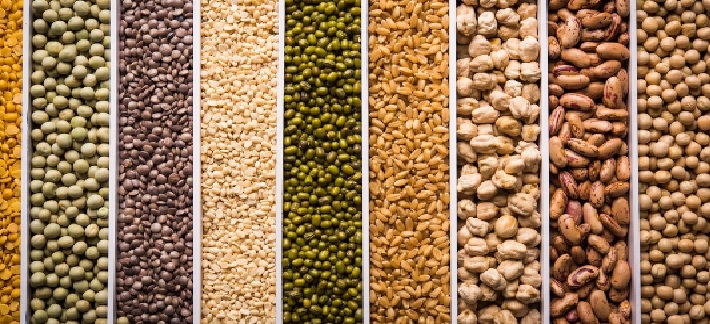
New Delhi: The official campaign for sowing Kharif crops has commenced in India, and the first government figures regarding the sown area have been released. Amidst concerns regarding the impact of El Niño and the possibility of a weak monsoon, major supplier nations—including Myanmar, African countries, Canada, and Australia—are closely monitoring the sowing of Kharif pulse crops in India.
Interestingly, the specific pulse varieties grown during India's Kharif season are either not cultivated or produced in negligible quantities in Canada and Australia; yet, both nations are looking toward India with anticipation. Crops such as Arhar (Tur/pigeon pea), Urad (black gram), Moong (green gram), Moth bean, Kulthi (horse gram), and Khesari (grass pea) are cultivated in India during the Kharif season. While Australia produces some Moong, India currently has a ban on its import.
According to official data, the total sown area for Kharif pulses reached 52,000 hectares by June 5 this year. This marks an increase of 17,000 hectares compared to the 35,000 hectares sown during the same period last year, though it remains 50 percent lower than the five-year average area of 1.04 lakh hectares for this date. The total area under pulse crops for the entire Kharif season of the previous year stood at 118.97 lakh hectares. The five-year average area for pulses in the current Kharif season is estimated at 123.64 lakh hectares, although the actual sown area is expected to remain below this figure.
Compared to last year, the sown area for Tur increased from 3,000 hectares to 5,000 hectares, and the area for Urad rose from 6,000 hectares to 10,000 hectares. Conversely, the area under Moong fell from 17,000 hectares to 15,000 hectares, and the acreage for Kulthi dropped from 6,000 hectares to 4,000 hectares. The area under cultivation for other pulse crops has surged from 4,000 hectares to 18,000 hectares.