
Competitiveness of Basmati rice increased due to the end of MAP
26-Sep-2024 03:39 PM
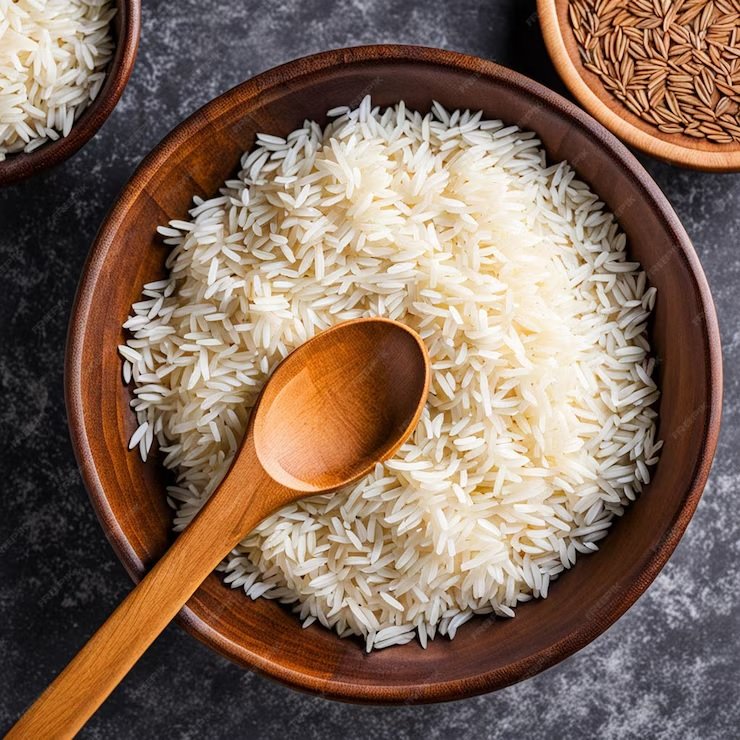
New Delhi. The abolition of the Minimum Export Price (MAP) of Basmati rice by the Central Government has increased its competitiveness, due to which new orders are expected from Middle East Asia, Europe and America etc.
MAP of $ 950 per tonne was fixed for Basmati rice, so Indian exporters could not contract at a price below this.
Pakistan was benefiting from this and it was increasing the export of its Basmati rice by offering a lower price. Now Indian exporters will also be able to do so.
Domestic production of Basmati rice is expected to increase by 10-15 percent this time, while there will also be no price restrictions for exporters.
The interesting fact is that despite the implementation of MAP in the financial year 2023-24, the export of Basmati rice from India increased rapidly to above 52 lakh tonnes, which was a new record level.
In comparison, about 46 lakh tonnes of Basmati rice was exported from the country during the financial year 2022-23.
Its export earnings also increased tremendously during the period under review. APEDA data shows that in the first four months of the current financial year i.e. during April-July 2024, exports of Basmati rice from India increased to 19 lakh tonnes. Its export performance is expected to be even better in the coming months.
If conditions remain favorable, the export of Basmati rice may increase to even above the record level of 2023-24 during the entire period of FY 2024-25.
India remains the largest exporter of rice in the world. The Minimum Export Price (MAP) was creating some hindrance in the export of Basmati rice but now it is over.
With this, India is now able to sell its product in foreign markets at a competitive price with Pakistan. If Pakistan offers its Basmati rice at the rate of $ 800-850 per tonne, Indian exporters can also do the same.
In India, Basmati paddy-rice is mainly produced in Punjab, Haryana and Western Uttar Pradesh, while Uttarakhand, Himachal Pradesh, Delhi and Jammu and Kashmir are its other producing areas. A strong arrival of new Basmati paddy is expected to start from next month.