
Improved Supply Situation Likely to Keep Pulses Market Stable
22-Dec-2025 04:08 PM
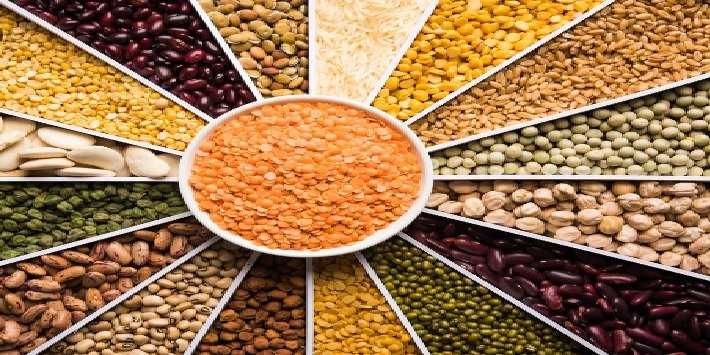
New Delhi: Due to improved supply and availability in the domestic market and continued regular imports of cheaper pulses from abroad, the prices of pulses are expected to remain stable within a certain range.
There has been some increase in the sowing area of Rabi pulses, and the government is also actively working towards creating a buffer stock of 2 million tonnes of pulses.
Prices of pulses are soft in exporting countries. Indications of excellent production of pulses are coming from Canada, Australia, Myanmar, Russia, and African countries.
Officials of the Department of Consumer Affairs say that due to the above reasons, the pulses market is likely to remain largely stable in the coming months.
The condition of Rabi pulses crops looks good, which could lead to better production, especially of chickpeas and lentils.
According to official sources, a sharp increase in pulse prices is not expected in the next few months as all the conditions are favorable to keep the market under control.
Central agencies are procuring Kharif pulses – tur, urad, and moong – from farmers at Minimum Support Price (MSP), and procurement of Rabi pulses will also be done if needed.
The sowing area of Rabi pulses has increased by 14.5 percent this year compared to last year, reaching 13.4 million hectares.
Private traders/dal millers have a good stock of pulses, which they have built up through procurement of Kharif production and imports from abroad. As a result, the supply and availability situation in the domestic market remains comfortable.
The inflation rate in pulses has been negative since February 2025. It reached its peak at 113 percent in August 2024, which decreased to 15.86 percent by November 2025. Due to the improvement in the supply and availability situation, the inflation rate of pulses has been on a downward trend for the last 10 months.
Meanwhile, the government has indicated that it will extend the agreement for duty-free import of pigeon peas and black gram from countries like Myanmar, Mozambique, and Malawi for the next five years.