
Lower Output, Delayed Crop May Push Up Red Chili Prices
11-Oct-2025 10:54 AM
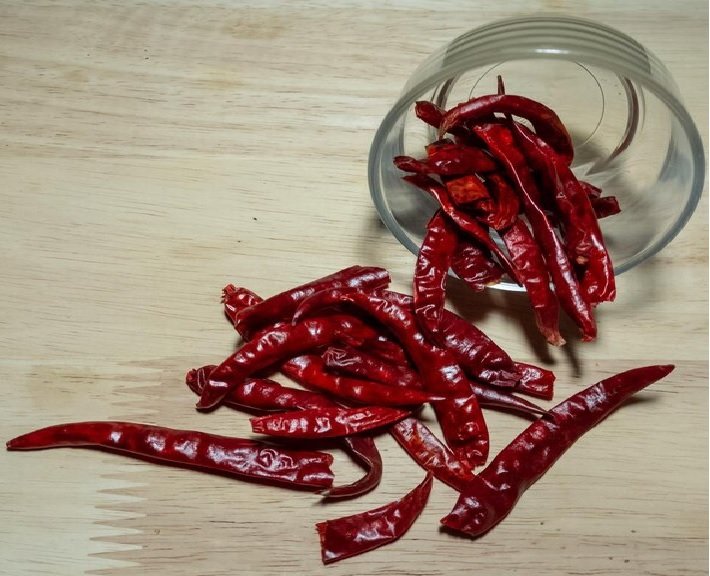
Guntur. Domestic red chili production is expected to decline this year due to reduced acreage in major producing states, unfavorable weather and rainfall conditions, and the occurrence of natural disasters in some areas. Furthermore, harvesting and preparation of the new crop may be delayed by 20-25 days.
This is having a positive psychological impact on the market, and red chili prices are showing signs of a rise or strengthening.
Nationally, red chili acreage has declined significantly by 35-40 percent this year compared to last year. The five top producing states—Andhra Pradesh, Telangana, Karnataka, Madhya Pradesh, and Maharashtra—have reduced acreage.
In Karnataka, acreage is expected to decline by up to 50 percent. In some areas, the first crop was destroyed due to heavy rains and waterlogging, forcing farmers to replant.
Demand for red chili peppers in the domestic market (wholesale markets) is gradually strengthening, while the arrival of agricultural produce is decreasing. Demand for cold storage is expected to increase soon.
The average price of red chili peppers in July-August was ₹13,000-₹13,500 per quintal, which has now increased by 15 percent. The market is expected to remain strong until the arrival of the new crop begins in earnest.
Cold storage currently holds approximately 15 million bags of red chili peppers, which is almost the same as last year. However, this time, the arrival of the new crop is expected to be delayed by about a month, which will increase demand and consumption.
According to rough estimates, the arrival of the new crop may begin around January 20th. During the last two months, the prices of domestically consumed red chilli varieties - 5531, 341, 334 and others - have increased by about Rs 30 per kg, but the prices of export quality red chilli varieties like Teja have improved by only Rs 10 per kg due to weak export demand.
China, the biggest buyer of Indian red chilli, has already made huge purchases. This time it has imported about 5000 containers more red chilli as compared to last year. There is a huge stock of it there, hence it is purchasing less now.