Home News
24-Sep-2026 06:55 PM
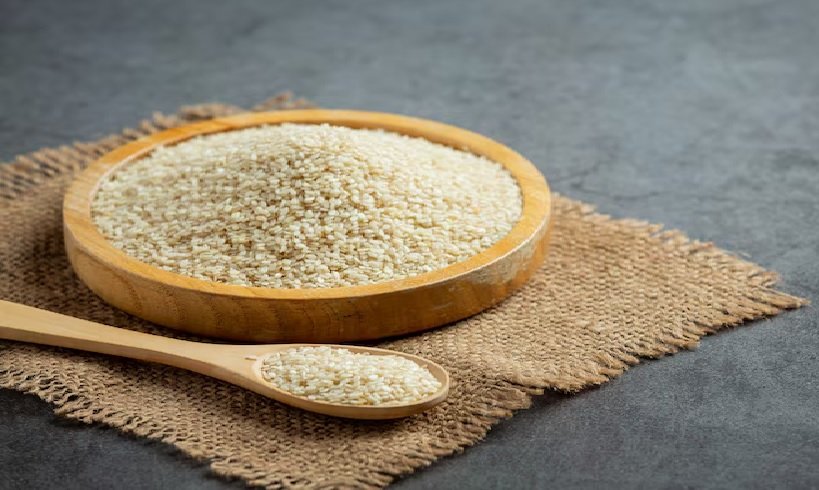
New Delhi. Trading in Isabgol (psyllium husk) has recently commenced at the Unjha market. It is worth noting that there has been a state of uncertainty regarding the GST status over the past two months. Currently, prices at the major Unjha market have risen by ₹5–7 per kilogram, with market arrivals recorded at 2,500–3,000 bags. Meanwhile, arrivals at the Merta and Nagaur markets in Rajasthan stand at 400–500 bags. In Gujarat's Unjha market, Isabgol prices are quoted between ₹115 and ₹145 per kilogram depending on quality, whereas prices in Rajasthan's markets range from ₹105 to ₹135. Notably, the country has witnessed a decline in Isabgol production over the last two to three years. Production stood at 38–48 lakh bags (each weighing 70–75 kg) in 2024, dropping to 28–30 lakh bags in 2025, and further shrinking to 20–22 lakh bags in 2026.
Isabgol is primarily produced in Rajasthan and Gujarat. While Gujarat accounts for 25–30% of total production and Rajasthan for 65–70%, the majority of export trade takes place in Gujarat due to the higher concentration of processing units there.
No price slump expected
Industry sources indicate that there is little likelihood of a significant drop in current Isabgol prices. The market is expected to see minor fluctuations of ₹3–5 in the near term, with a clearer picture regarding major price trends emerging only after sowing data becomes available in November. Currently, prices at production-center markets range from ₹105 to ₹140 per kilogram. Sources indicate that market arrivals have declined because the bulk of the total produce has already reached the mandis. Additionally, export and local demand are expected to remain strong in the coming days. Consequently, trade estimates suggest a price increase of ₹5–7 per kilogram leading up to Diwali.
Stock
Sources state that a significant rise in Isabgol prices is unlikely in the near term due to adequate stocks at production centers. Current trade estimates place Isabgol stocks at 8–10 lakh bags in Gujarat and 3–4 lakh bags in Rajasthan. As a result, price fluctuations are expected to remain within a range of ₹3–5 per kilogram.
Exports
Isabgol exports during the first four months of the current fiscal year (2026-27) have surpassed those of the previous year. Data shows that exports rose from 21,351.50 tonnes during April–July 2025 to 22,658 tonnes during April–July 2026. An increase in exports was also recorded specifically in July; exports stood at 4,910 tonnes in July 2025, compared to 5,754 tonnes in July 2026.