
Rice Acreage Growth Raises Water Concerns
30-Dec-2025 08:49 PM
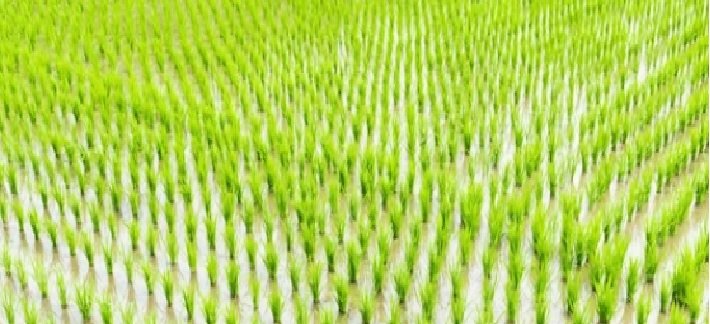
Chandigarh. For the past 12-13 years, India has been the world's largest exporter and second-largest producer of rice. There has been a continuous and significant increase in the area under rice cultivation.
In the 2025 Kharif season, the national area under rice cultivation rapidly increased to a new record level of 441 lakh hectares. It is noteworthy that rice cultivation requires the most irrigation, and for this, both surface water and groundwater are used extensively.
In Punjab and Haryana, the groundwater level is continuously and rapidly declining. A decade ago, water was available at a depth of 30 feet, but now borewells have to be dug to a depth of 80 to 200 feet.
During the last five years, there has been indiscriminate use of water resources in these two states, and this continues even now. Although India has surpassed China to become the number one producer of rice, the country is paying a heavy price for this achievement.
If serious attention is not paid to water conservation, many challenges and problems may arise in the future.
The average yield of rice in Punjab and Haryana is the highest because of the excessive use of chemical fertilizers, water resources, and pesticides.
This also has an adverse effect on the environment and soil fertility. This year, states with low rainfall, such as Punjab,
Haryana, and Rajasthan, received excessive rainfall during the southwest monsoon season, so there was no water shortage. However, when monsoon rainfall is less, the water scarcity will be felt acutely.