Home News
02-Nov-2026 04:37 PM
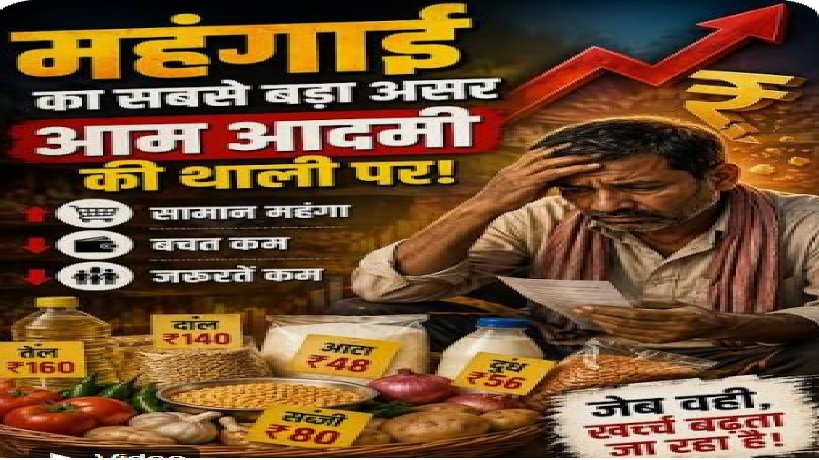
New Delhi. The prospect of a decline in Kharif crop production, coupled with a slow pace of sowing for Rabi crops, is driving a gradual increase in food inflation—a trend expected to persist. It appears that in the coming months, the food inflation graph could climb to a concerning level.
Retail prices for rice, sugar, pulses, and edible oils are already significantly higher than they were last year, placing an increased burden on ordinary consumers. While the harvesting of Kharif crops and their subsequent arrival in agricultural markets (mandis) are gradually picking up, there is no sign of a softening in prices—contrary to the typical trend where increased supply during the harvest season usually exerts downward pressure on prices.
Data from the Price Monitoring Cell of the Department of Consumer Affairs indicates that the prices of several key food items—including rice, sugar, mustard oil, spices, and onions—are running well above last year’s levels. The El Niño weather pattern has led to reduced monsoon rainfall, which is expected to partially impact Kharif crop production. Meanwhile, high prices for most commodities in the international market have made imports—particularly of edible oils and pulses—more expensive for India.
According to official data, the food inflation rate, based on the Consumer Price Index (CPI), surged to 7.74 percent in September. This was driven by sharp price increases in edible oils and various spices (including onions, garlic, ginger, and black pepper).
The outlook for Kharif crop production is mixed; while some regions anticipate a good harvest, others face the prospect of a poor yield. Production of pulses, oilseeds, cotton, and sugarcane may decline, and among coarse cereals, the maize crop is also at risk. Furthermore, the sowing of Rabi crops has not been satisfactory.