
Significant increase in pulse acreage driven by Urad
14-Sep-2026 03:10 PM
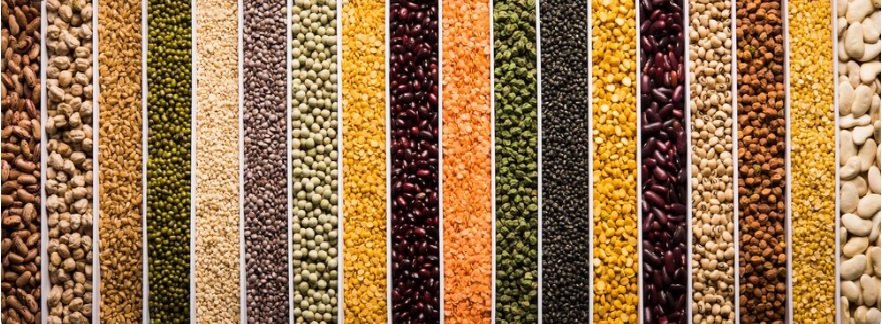
New Delhi. After lagging behind for a long period, the cultivation area for Kharif pulse crops has surpassed last year's figures—a positive sign. According to official data, the total area under pulse crops reached 118.46 lakh hectares by September 11 this year, marking an increase of 1.67 lakh hectares over the 116.79 lakh hectares sown during the same period last year.
During the period under review, the area under Arhar (Tur/pigeon pea) rose from 45.47 lakh hectares to 46.11 lakh hectares, Urad acreage surged from 22.81 lakh hectares to 25.52 lakh hectares, and Moth acreage improved from 9.20 lakh hectares to 9.24 lakh hectares; conversely, the area under Moong (green gram) declined from 34.49 lakh hectares to 33.30 lakh hectares, and the sown area for other pulses fell from 4.27 lakh hectares to 3.83 lakh hectares.
Sowing of Kharif pulse crops has reached its final stage. Due to the uneven distribution of monsoon rainfall, crop conditions vary—appearing promising in some areas and disappointing in others. Maharashtra and Karnataka, the two leading producers of Tur, have not received adequate rainfall this season.
All eyes are now fixed on the rainfall in September. Market arrivals of short-duration pulse crops like Urad, Moong, and Moth are expected to increase from next month; however, since Tur is a long-duration crop, the pace of its new crop supply will only pick up momentum in December-January.
Despite the increase in sown area, uncertainty regarding a rise in pulse production remains until weather and rainfall conditions become favorable. Good rainfall is needed in September. Maharashtra and Gujarat have received rainfall.