
Food Subsidy Bill Likely to Be Significantly Higher Than Budget Estimates
24-Oct-2025 05:15 PM
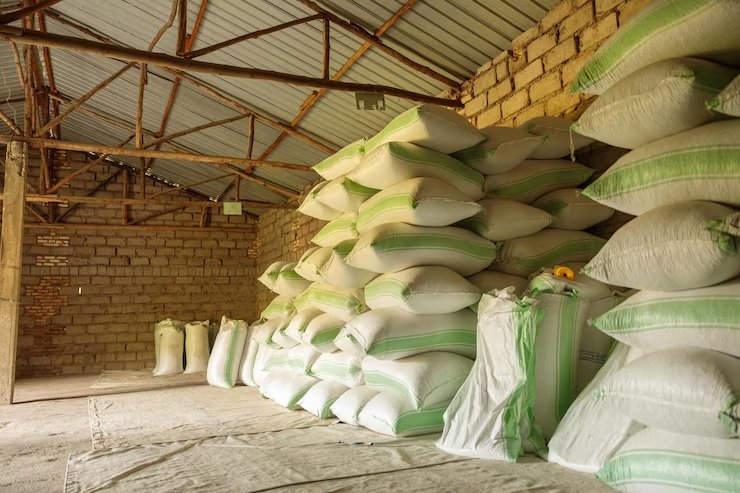
New Delhi. The Union Budget has allocated ₹2.03 lakh crore for food subsidies for the 2025-26 fiscal year, but the actual amount is expected to be 10-15 percent higher due to increased food procurement, higher costs for transportation, storage, and maintenance, and additional distribution costs.
Food grains are also being withdrawn from the central pool at subsidized prices. Under the Pradhan Mantri Garib Kalyan Anna Yojana, approximately 81 crore people in the country are currently receiving free grain at the rate of 5 kg per month. The free ration scheme has been extended until December 31, 2028, and is estimated to cost ₹11.8 trillion.
The new marketing season for Kharif paddy and other crops began on October 1, 2025, and the central agency, the Food Corporation of India (FCI), and its affiliated provincial agencies are vigorously procuring paddy from farmers at the Minimum Support Price (MSP).
It is noteworthy that more than 70 percent of government subsidies are allocated to the Food Corporation. The budget initially provided a subsidy of ₹1.40 lakh crore for the Food Corporation, but this has now been increased to ₹1.70 lakh crore.
The Corporation has so far received ₹75,921 crore for the financial year 2025-26, representing 53 percent of the revised budget provision. Furthermore, the Ministry of Finance has provided an additional ₹50,000 crore in advance for other expenses.
The Corporation is required to repay this advance by March 31, 2026. The Food Corporation is also to receive a short-term loan of Rs 25,880 crore during the current financial year.
The Corporation will be required to take this loan to manage the surplus grain stock. According to official sources, unless there is a large scale withdrawal of food grains under the Open Market Sale Scheme (OMSS) and other methods, the cost of storage operations will remain very high.
As on October 1, 2025, the Food Corporation had a total stock of about 665.30 lakh tonnes of food grains, including 350 lakh tonnes of rice and 315.10 lakh tonnes of wheat.