
Government considering measures to increase the purchase of gram at MSP
23-May-2025 04:00 PM
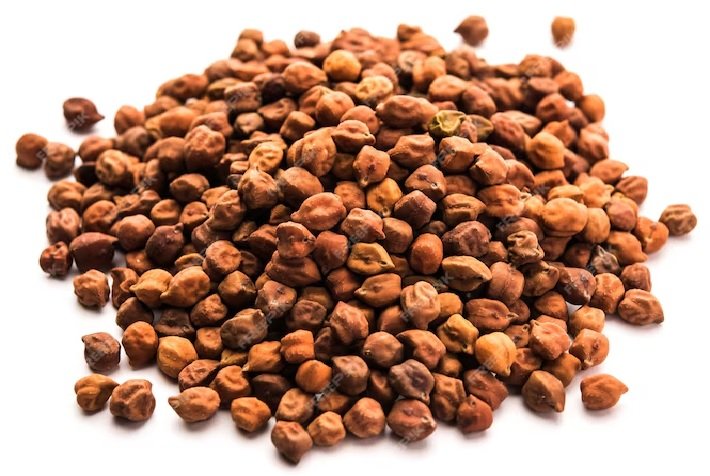
New Delhi. Both central agencies authorized for procurement — the National Agricultural Cooperative Marketing Federation of India (NAFED) and the National Cooperative Consumer Federation of India (NCCF) — are struggling to procure gram from farmers at the Minimum Support Price (MSP) during the current Rabi marketing season. This has prompted the government to consider new measures to boost procurement.
Gram accounts for nearly 50 percent of India’s total pulse production, but this season the pace of government procurement has been notably slow.
So far, only around two lakh tonnes of gram have been procured by government agencies. The MSP for gram in the 2024-25 season is set at Rs 5,650 per quintal, while the prevailing wholesale market prices are either around or slightly below this level.
As a result, farmers lack the incentive to sell to government agencies. Many producers are holding back in the hope that prices for Desi gram will rise if the import of yellow peas is disrupted, especially since the period of duty-free import is nearing its end.
According to trade analysts, the peak supply period for gram has already passed. Prices in major producing areas have fallen to around Rs 5,400 per quintal, prompting aggressive buying by traders and processors.
This has made it even more challenging for government agencies to scale up procurement. Officials say that procurement decisions are now waiting for price stability. If market prices begin to rise, the government may consider buying gram at prevailing rates for buffer stock.
It is worth noting that government agencies successfully procured 26.10 lakh tonnes of gram in the 2021-22 season and 23.50 lakh tonnes in 2022-23. However, due to higher market prices, procurement dropped sharply to only 43,120 tonnes in 2023-24. The purchase for the current 2024-25 season is still ongoing.
Meanwhile, the Maharashtra Dal Millers Association has urged the government to halt duty-free imports of yellow peas and impose a 60 percent customs duty on Desi gram. Over 30 lakh tonnes of yellow peas have already been imported into the country, and a substantial stock remains available.