
Likely Decline in Rice and Maize Production
09-Sep-2026 05:26 PM
New Delhi. Compared to last year, there has been a significant drop in the area under paddy cultivation during the current Kharif season, and monsoon performance has been lackluster. Consequently, a decline in paddy and rice production is anticipated. Paddy transplantation is nearly complete; the cultivation area has settled at 421.82 lakh hectares—a reduction of 16.37 lakh hectares (approximately 4 percent) from last year's 438.19 lakh hectares.
The impact of El Niño is projected to peak in the coming months. While its effect on India's southwest monsoon is already visible, there are concerns that the northeast monsoon (October–December) could also be affected. This could adversely impact Rabi-season paddy cultivation. The northeast monsoon brings the majority of rainfall to southern states, enabling farmers there to cultivate Rabi paddy on a large scale; deficient rainfall this time could impact cultivation in the region.
Notably, the deficit in southwest monsoon rainfall has led to a reduction in paddy acreage across the four major rice-producing states of South India: Telangana, Andhra Pradesh, Karnataka, and Tamil Nadu. Telangana is among the top producers of paddy and rice.
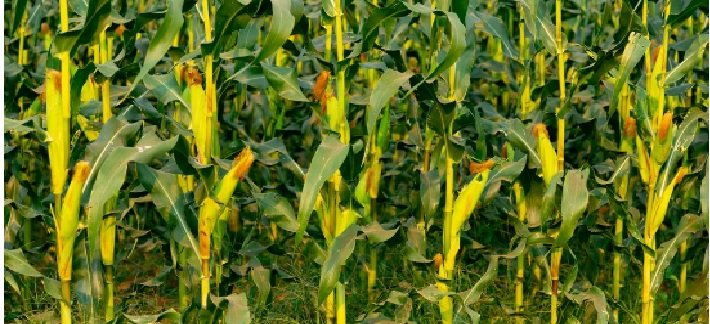
As for maize, the sowing area has also decreased by 3 lakh hectares during the current Kharif season, falling from 94.10 lakh hectares last year to 91.10 lakh hectares this year. Maize is cultivated during both the Kharif and Rabi seasons.
A USDA report projects a combined decline of 120 lakh tonnes in India's rice and maize production during the 2026-27 season compared to 2025-26. Under this, rice production is projected to decline by 7 million tonnes—from 154 million tonnes to 147 million tonnes—and maize production is expected to fall by 5 million tonnes—from 55 million tonnes to 50 million tonnes.