
Serious Efforts Needed for Self-Reliance in Pulses Production
14-Jan-2026 08:40 PM
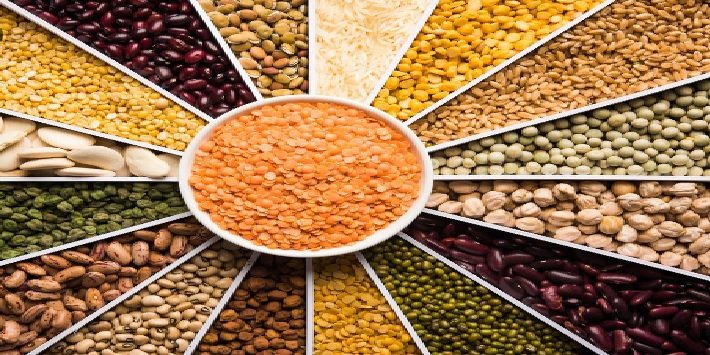
Mumbai. A member of the advisory board of the Global Pulses Confederation (GPC) has stated that while the Indian central government increases the Minimum Support Price (MSP) for pulses every year, this has become merely symbolic.
The increase in MSP is not being matched by a sufficient increase in procurement from farmers, and producers are often forced to sell their pulses at prices significantly below the MSP.
This analyst says that the government's "Mission for Self-Reliance in Pulses" is a commendable step, but India is unlikely to achieve self-sufficiency in pulses in the near future.
This is because the irregular procurement of pulses at MSP and the continued large-scale import of cheaper pulses from abroad are not providing farmers with adequate incentive to increase production. The government needs to make more serious efforts, especially to motivate and encourage farmers.
The government announces the Minimum Support Price for three pulses – pigeon pea (tur), urad, and moong – during the Kharif season and for two pulses – gram and lentil – during the Rabi season. For the 2025-26 marketing season,
the MSP for these pulses was increased by ₹86 to ₹450 per quintal, but the procurement of pulses at MSP is significantly behind the total target.
Currently, government procurement of Kharif pulses is underway, while procurement of Rabi pulses (gram and lentil) will begin in the coming months.
In the last Rabi marketing season, the government allocated a quota for the procurement of approximately 28 lakh tonnes of gram, but the actual procurement reached only 3.50 lakh tonnes.
This time, the proposal for the procurement of Kharif pigeon pea and moong was approved quite late, in December 2025, and therefore, the process has not even started in some states.