Home News
02-Nov-2026 06:02 PM
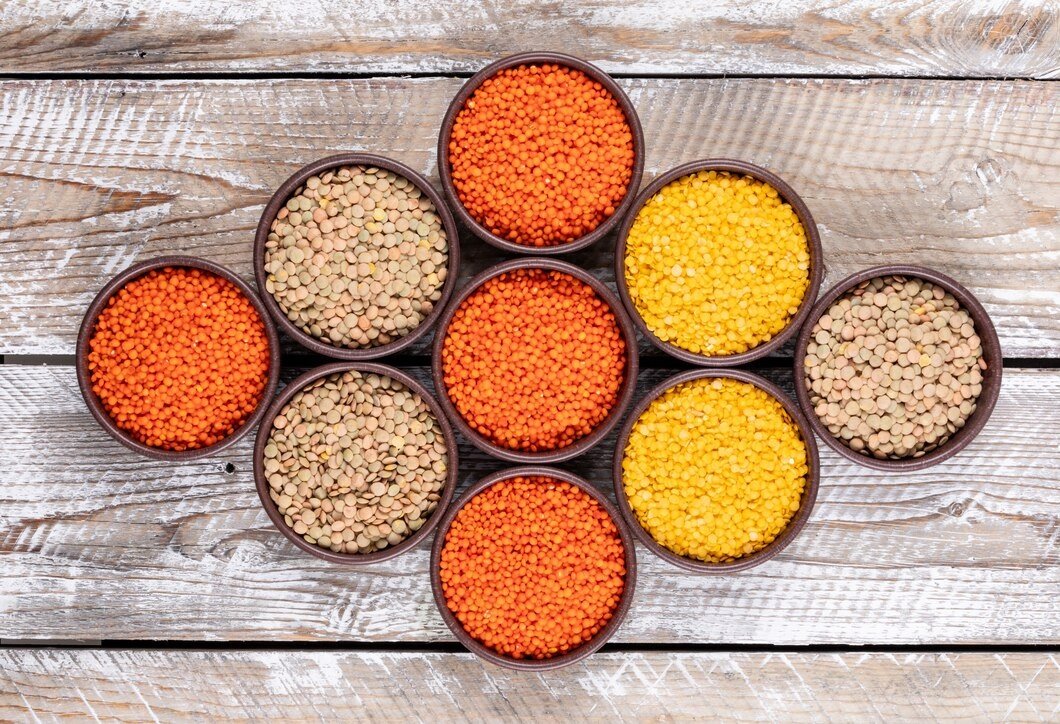
New Delhi. Despite a substantial increase in the Minimum Support Price (MSP) and strong market prices, the pace of sowing for the two major pulses—chickpea and lentil—remains notably slow. This is because current soil and weather conditions are not yet favorable for sowing.
The latest weekly data from the Union Ministry of Agriculture indicates that, as of October 30, the total area sown with Rabi pulses has reached only 9.45 lakh hectares—a decline of 10.11 lakh hectares, or 51.7 percent, compared to the 19.56 lakh hectares recorded during the same period last year. Specifically, the area under chickpea has fallen by 59 percent,
from 14.35 lakh hectares to 5.90 lakh hectares, while the area under lentil has dropped by 48.51 percent, from 2.14 lakh hectares to 1.00 lakh hectares. The area under moong (green gram) has remained stable at 1,000 hectares, whereas the area under urad (black gram) has improved from 21,000 hectares to 29,000 hectares. Additionally, other pulses, including peas, are also cultivated during the Rabi season.
Major chickpea-producing states include Madhya Pradesh, Rajasthan, Maharashtra, Karnataka, and Gujarat, while key lentil-producing states include Madhya Pradesh, Uttar Pradesh, Bihar, and West Bengal. Peas are also grown in these states, along with several others. As for moong and urad, they are cultivated across all three cropping seasons: Kharif, Rabi, and Zaid.
Maharashtra and Karnataka are currently grappling with severe drought, and Telangana is also facing an intense drought situation. Furthermore, states such as Rajasthan, Gujarat, Uttar Pradesh, and Madhya Pradesh have experienced an uneven distribution of monsoon rainfall across various regions.