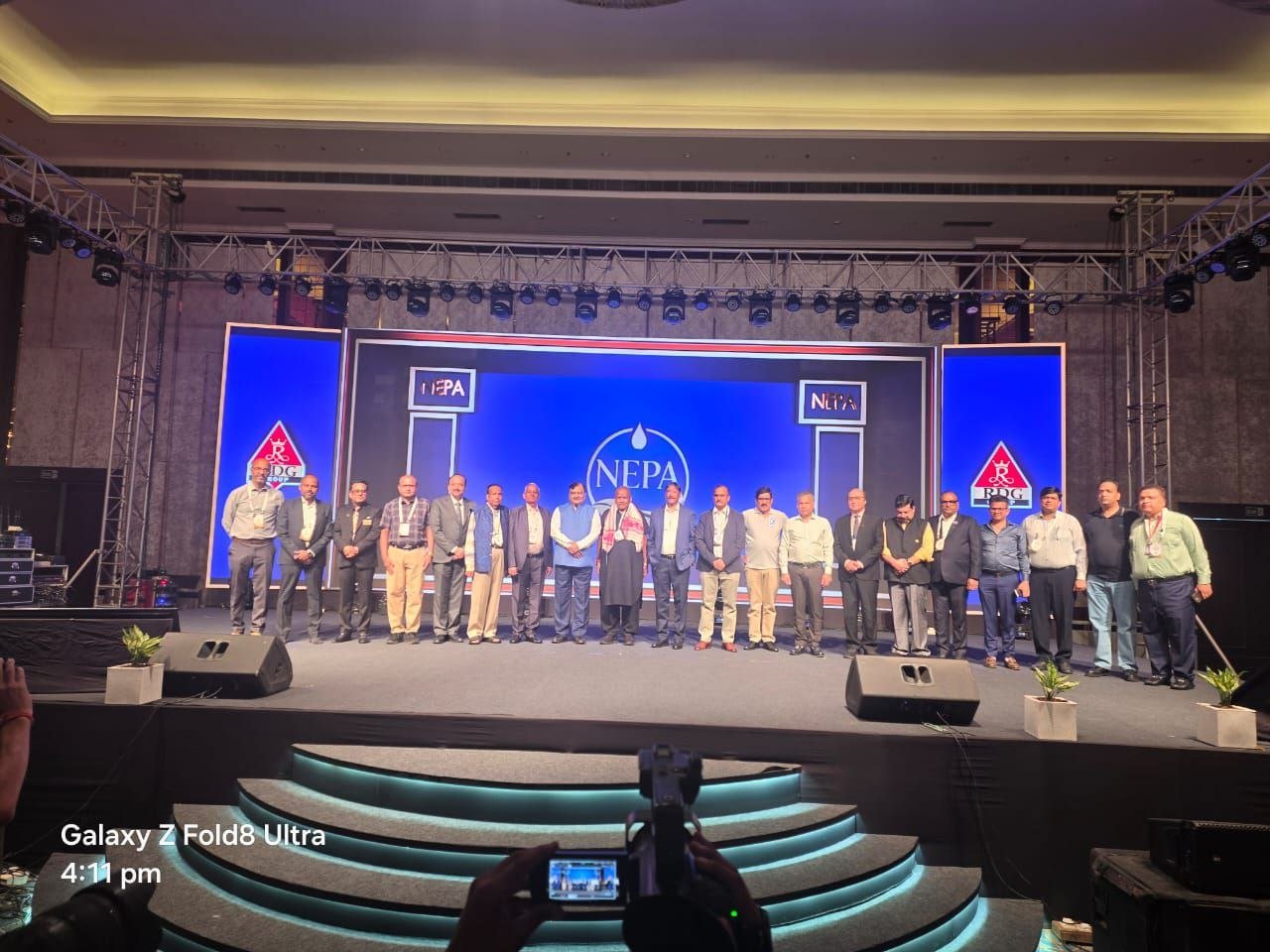
NEPA Organises First National Edible Oil Conclave 2026 in Guwahati
Industry Calls for Higher Mustard Production, Stable Policies and Greater Focus Under National Oil Mission
Guwahati, September 20, 2026:
The National Edible Oil Producers Association (NEPA) organised its first National Edible Oil Conclave 2026 in Guwahati on September 19–20, bringing together stakeholders from across the edible oil and oilseed industry.
More than 500 participants representing various states, including West Bengal, Bihar, Uttar Pradesh, Rajasthan, Haryana, Assam, Manipur and several other regions, attended the two-day conclave. The event also witnessed participation from international delegates, including representatives from Nepal.
More than 50 companies showcased their products and services through exhibition stalls, providing an opportunity for participants to interact with manufacturers, processors, traders and other industry stakeholders.
The conclave featured detailed panel discussions on mustard production, consumption trends, imports, government policies, crushing, value-added products, export opportunities and the future outlook for the mustard oil industry.
~~~~~~~~
Mustard Oil Consumption Expanding Across the Country
Leading the discussions, Kailash Kabra highlighted the growing consumption of mustard oil across India, particularly in eastern states.
He noted that mustard oil has traditionally been used not only for cooking but also in several other applications, including hair oil, body massage, pickles and certain medicinal uses. According to the discussion, the diverse applications of mustard oil continue to support its consumption across different regions.
Kabra also pointed to the need for a substantial increase in mustard production. He said the eastern region currently contributes only around 20% of consumption, while production is estimated at approximately 1.8 lakh tonnes.
The industry therefore needs greater acreage under mustard along with improved technology, quality seeds and better agricultural practices. Government support in these areas, he said, could help improve productivity and strengthen domestic availability.
~~~~~~~~
Industry Seeks Policy Stability
A major theme emerging from the panel discussion was the need for stable and predictable government policies.
Panelists observed that frequent changes or speculation regarding import duties can create uncertainty in the market. Even rumours of a possible duty change can influence market sentiment and trading decisions.
Participants noted that any reduction in import duty could potentially put temporary pressure on prices, but the long-term impact would depend on global prices, currency movements and exporters' pricing strategies. Exporters, they said, generally adjust their prices in response to changes in import duties.
The panel also discussed the possibility that changes in duty structures could affect imports from neighbouring countries, including Nepal.
~~~~~~~~
Higher Mustard Production Key to Reducing Imports
The panel emphasised that India's dependence on imported edible oils can only be reduced sustainably by increasing domestic oilseed production.
According to the discussions, mustard production in the previous season was revised to around 110 lakh tonnes. However, since a substantial portion of mustard is sold by farmers through local markets rather than government procurement agencies, domestic market prices remain particularly important for farmers.
Panelists said that if farmers receive adequate returns and increase mustard acreage, higher production would lead to greater crushing activity, increased domestic mustard oil availability and potentially lower dependence on imported edible oils.
The industry also called for greater focus on mustard under the National Oil Mission, including support for improved seeds, technology and farm-level practices.
~~~~~~~~
Dynamic Import Duty Structure Suggested
Participants proposed a more dynamic approach to edible oil import duties.
The panel suggested that India's import duty structure could take into account factors such as international edible oil prices, exchange rates, domestic production and other market variables. Similar mechanisms, panelists noted, are used in some major producing and exporting countries, including Argentina, Malaysia and Indonesia.
A proposal was also discussed for introducing a quota-based import mechanism for edible oils under SAFTA arrangements, with the objective of balancing regional trade commitments and domestic industry interests.
~~~~~~~~
Mustard DOC Needs Greater Export Focus
The panel also highlighted the importance of mustard de-oiled cake (DOC) in improving the economics of mustard processing.
Participants noted that India has considerable potential to expand mustard DOC exports and access untapped international markets. Greater attention to exports could provide additional value to the crushing industry and improve overall returns from mustard processing.
~~~~~~~~
Technology and AI Can Support Mustard Production
The discussion also touched upon the potential role of artificial intelligence and modern technology in mustard cultivation and production activities.
Panelists suggested that AI-based tools could increasingly be integrated into agricultural practices, including crop monitoring, production planning, disease identification, yield improvement and farm-level decision-making.
~~~~~~~~
Quality and Packaging Remain Critical
The panel also discussed the role of quality standards in strengthening the edible oil industry.
Participants said that FSSAI's increasing focus on packaging and standards is important for improving product quality and consumer confidence. Standardised packaging can also help improve market penetration and sale quantities.
The panel emphasised that processors and crushers should not compromise on quality. Maintaining consistent quality standards, they said, would be essential for the long-term growth and stability of the mustard oil industry.
~~~~~~~~
Industry Calls for a National Oil Board
One of the key suggestions emerging from the conclave was the creation of a National Oil Board.
Panelists proposed that such a body could serve as a structured platform connecting the government with the oilseed and edible oil industry. They suggested that major policy changes affecting the sector should be discussed with such an industry body before implementation.
Participants argued that a consultative mechanism could help reduce uncertainty and improve coordination between policymakers and industry stakeholders.
~~~~~~~~
Biofuel, Energy and Currency to Remain Key Market Factors
The panel also highlighted the increasing importance of factors outside the traditional edible oil market.
Participants suggested that traders and processors should consider biofuel margins, energy prices, international logistics and currency movements while taking buying or selling decisions.
The ongoing geopolitical tensions around the Black Sea region and Iran were also discussed as potential risks for international logistics. Higher freight and logistics costs can directly influence the landed cost of imported oils and therefore domestic market dynamics.
~~~~~~~~
Mustard Supply Tightening Towards the End of Season
The discussion on the future mustard price outlook remained one of the key attractions of the conclave.
Several panelists observed that mustard crushing was particularly strong during the initial part of the season. As a result, available stocks have gradually declined.
According to estimates discussed at the event, around 70 lakh tonnes of mustard had already been crushed by August, while approximately 40 lakh tonnes of old-season stock was also available.
With roughly five to six months remaining before the arrival of the new crop, participants said that mustard seed availability in mandis is already showing signs of tightening.
Panelists therefore indicated that the market could face a tighter supply situation towards the end of the current season. Some participants expected prices to come under upward pressure from November onwards, although the actual market direction will depend on arrivals, crushing demand, stock levels, imports and international edible oil markets.
~~~~~~~~
Call for Greater Domestic Consumption of Mustard Oil
The panel also discussed the growing presence of refined mustard oil in the market.
Some panelists argued that greater emphasis should be placed on traditional mustard oil and suggested that the use of refined mustard oil should be restricted or discontinued. This view was presented as part of the broader discussion on maintaining the identity and quality of mustard oil and strengthening demand for domestically produced mustard.
~~~~~~~~
Overall Industry Message
The two-day NEPA National Edible Oil Conclave 2026 provided a broad platform for producers, crushers, traders, processors and other stakeholders to discuss the challenges and opportunities facing India's edible oil sector.
The discussions highlighted a common industry focus on higher mustard production, improved seeds and technology, policy stability, rational import mechanisms, stronger DOC exports, quality compliance and greater coordination between government and industry.
The overall message emerging from the conclave was that reducing India's dependence on imported edible oils will require a sustained increase in domestic oilseed production rather than relying only on changes in import duties.
With mustard availability tightening towards the end of the current season, participants also expect the supply-demand balance to remain an important factor for the mustard market in the coming months.
The price and market outlook mentioned above reflects observations and views expressed by panelists during the NEPA National Edible Oil Conclave 2026 and should be read as industry perspectives rather than a guaranteed price forecast.