
Sharp Decline in Tur Prices Compared to Last Year
05-Jul-2025 01:26 PM
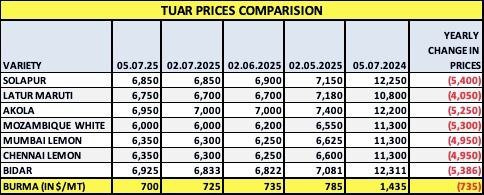
Sharp Decline in Tur Prices Compared to Last Year
★ Tuar (pigeon pea) prices have dropped significantly across all major markets over the past year. On July 5, 2024, prices were above ₹12,000 per quintal, but now they have fallen to the range of ₹6,000 to ₹7,000. This decline of over ₹5,000 has put farmers, traders, and millers in a state of distress.
~~~~~~~~~
Current Prices and Decline as of July 5, 2025 (compared to last year):
Solapur: ₹6,850 (Drop of ₹5,400)
Akola: ₹6,950 (Drop of ₹5,250)
Mumbai Lemon: ₹6,300 (Drop of ₹4,950)
Bidar: ₹6,925 (Drop of ₹5,386)
~~~~~~~~~~
Reasons Behind the Decline
1. Massive Imports
★ In 2024–25, India imported 12.23 lakh tons of tuar, compared to 7.71 lakh tons in 2023–24 and 8.95 lakh tons in 2022–23. This is nearly a 60% increase over the previous year, putting direct pressure on the domestic market.
~~~~~~~
2. Rising Production in Africa and Myanmar
★ Production in both Africa and Myanmar has been increasing year after year. Exporters in Myanmar are offering steep discounts to clear stocks before African tur hits the global market after September, further depressing prices.
~~~~~~
3. Losses for Domestic Farmers and Traders
★ While international farmers and exporters are benefiting, Indian farmers, processors, and traders are facing heavy losses. The government has allowed tur imports until March 31, 2026, which could worsen the crisis.
★ Due to the price crash, many farmers in key growing states are planning to reduce tur acreage this season. Instead, they are leaning toward crops like maize, sugarcane, and other cash crops.
★ If timely government intervention is not undertaken, the situation may deteriorate further. Farmers’ incomes will be hit, the rural economy will come under stress, and the dream of self-sufficiency will slip further away.
★ However, some demand may return before the arrival of African tur, which could provide minor support to prices.