
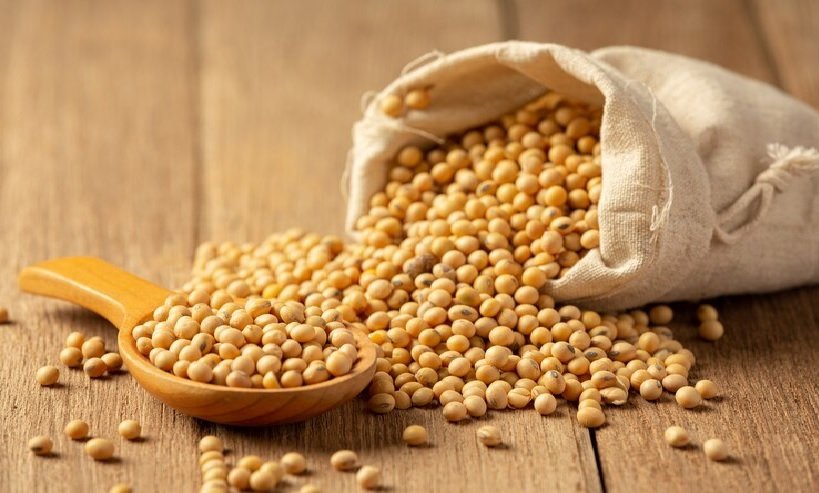
The government is taking significant steps to address the falling market prices of Kharif oilseed crops, including soybean and groundnut, through its Price Support Scheme (PSS). Key developments indicating improvement in the support price and procurement of these crops include:
Fixed Minimum Support Prices (MSP):
- For the 2024-25 season, the Union Agriculture Ministry has set MSPs to stabilize the prices of soybean (Rs 4892 per quintal), groundnut (Rs 6783 per quintal), sunflower (Rs 7280 per quintal), and sesame (Rs 9267 per quintal). These prices aim to ensure that farmers receive a fair income and to curb price fluctuations in the market.
Procurement Progress:
- Soybean: As of December 12, 2024, 4.15 lakh tonnes of soybean have been procured, with significant contributions from states like Madhya Pradesh (2.17 lakh tonnes), Maharashtra (1.09 lakh tonnes), and Telangana (58,000 tonnes). The total approved procurement target for soybean is 33.61 lakh tonnes, with continued procurement expected through December and January.
- Groundnut: Total groundnut procurement has reached 1.97 lakh tonnes, with Gujarat leading at 1.51 lakh tonnes, followed by Rajasthan and Uttar Pradesh. The target procurement for groundnut is set at 20.47 lakh tonnes.
- Sunflower: A target of 13,210 tonnes of sunflower is set for Karnataka, and 3,065 tonnes have already been procured.
- Sesame: The procurement of sesame has not started yet, but a target of 31,596 tonnes has been set, primarily in Uttar Pradesh.
State-Specific Targets and Approvals:
- The government has approved procurement targets for various states, ensuring widespread support. For example, 13.06 lakh tonnes of groundnut are to be procured in Gujarat, and 5.32 lakh tonnes in Rajasthan.
- The procurement process for oilseeds will continue to be monitored closely, with additional procurement targets approved for states like Madhya Pradesh, Maharashtra, Gujarat, Karnataka, Telangana, Uttar Pradesh, and Andhra Pradesh.
These actions are designed to stabilize oilseed prices, support farmers’ incomes, and ensure a more secure agricultural market for Kharif oilseeds.