
"Tuvar Market Weakens as Supply Outpaces Demand"
10-Jun-2025 04:01 PM
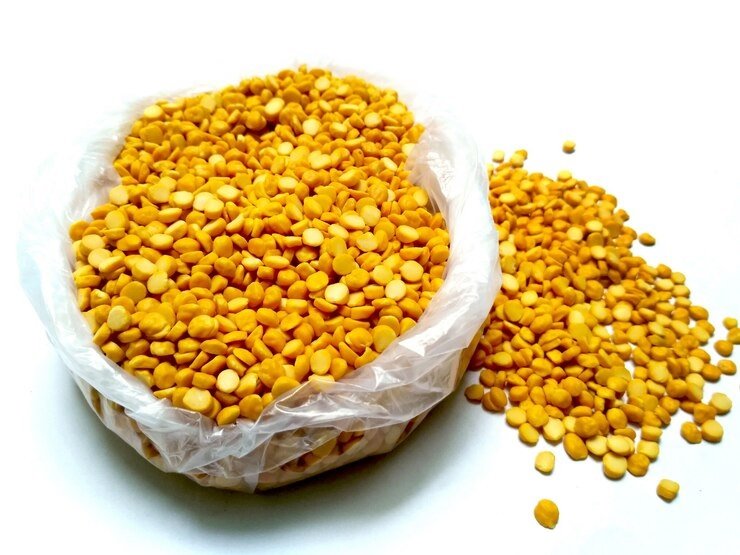
New Delhi. Under the Price Support Scheme (PSS), the Central Government has purchased tuvar in large quantities from farmers at the minimum support price, but still there is no sign of an increase in its wholesale market price. The minimum support price (MSP) of tuvar is fixed at Rs 7550 per quintal this time, while the market price is running 10-12 percent below this. According to trade analysts, on one hand, the domestic production of tuvar was better during the 2024-25 season and on the other hand, a record import of more than 12 lakh tonnes of tuvar was also done in the financial year 2024-25 (April-March). The price of tuvar softened due to import of huge quantities at cheap prices from Myanmar and African countries. The retail price has fallen by 25 percent since February 2025, while the inflation rate in tuvar has become negative during April 2025 as compared to April 2024. Arhar or Tuvar is considered a premium quality pulse. During the current year, 5.90 lakh tonnes of Tuvar has already been procured from farmers in states like Maharashtra, Karnataka, Andhra Pradesh, Telangana and Gujarat by the Central Government's subordinate agency - NAFED and NCCF, which is the second highest level after the record purchase of 2017-18. According to trade analysts, the Central Government has already approved duty-free import of Tuvar till 31 March 2026, with the help of which it is being imported unhindered from Myanmar and African countries.
According to critics, the price of Tuvar in some places in domestic wholesale markets has come down to around Rs 6600 per quintal, while the cost of Tuvar imported from Myanmar is Rs 6220 per quintal and the cost of Tuvar imported from African countries is Rs 5600 per quintal. A trader from Latur says that the demand for Tuvar is weak compared to supply and availability. The government also has a huge stock of it, due to which there is pressure on the market. Its uninterrupted import from Myanmar continues while new imports from Africa will also begin after two-three months.