
Good Monsoon Boosts Kharif Cultivation Across Maharashtra
12-Jun-2025 03:31 PM
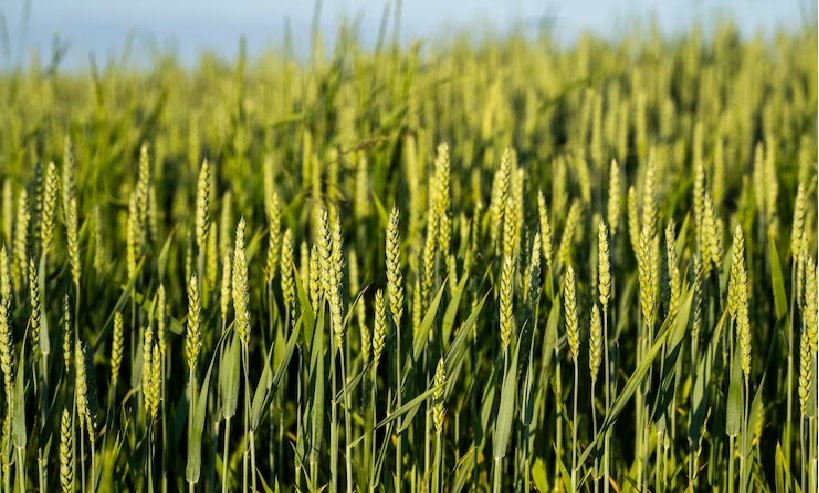
Maharashtra. This year, the western Indian state of Maharashtra has received significant rainfall during the pre-monsoon and the early phase of the southwest monsoon, allowing farmers to begin sowing Kharif crops earlier than usual. According to the state agriculture department, as of June 9, the total area sown under Kharif crops has reached around 1.28 lakh hectares, a sharp increase of 76 thousand hectares compared to just 52 thousand hectares during the same period last year.
Official data shows a shift in the cropping pattern. While the area under paddy cultivation has declined from 10 thousand hectares last year to around 1,200 hectares this year, the area under jowar has increased from 25 hectares to 117 hectares. Millet cultivation rose from 144 hectares to 2,973 hectares, and maize from 474 hectares to 6,323 hectares. Other coarse grains also saw an increase from 8 hectares to 149 hectares. This brings the combined area under paddy and coarse grains close to last year’s figure of 10,745 hectares.
A substantial rise has been recorded in the sowing of pulses, particularly arhar (tuvar), urad, and moong. The total area under pulse crops has surged from 567 hectares last year to 18,580 hectares this year. Tuvar cultivation has expanded from 370 hectares to 9,644 hectares, moong from 30 hectares to 2,610 hectares, and urad from 167 hectares to 6,151 hectares. Sowing of other pulses has also started, reaching 165 hectares, whereas there had been no sowing in this category by June 10 last year.
In the oilseeds category, the area under soybean cultivation has jumped from 389 hectares to 13,118 hectares. Among industrial crops, the area under cotton cultivation has more than doubled—from 40,000 hectares last year to 85,000 hectares this year. Despite weak wholesale prices of soybean and cotton, farmers received some support from government agencies through procurement at the minimum support price (MSP).