
Government Measures Likely to Impact Wheat Market Dynamics
08-Jan-2026 08:48 PM
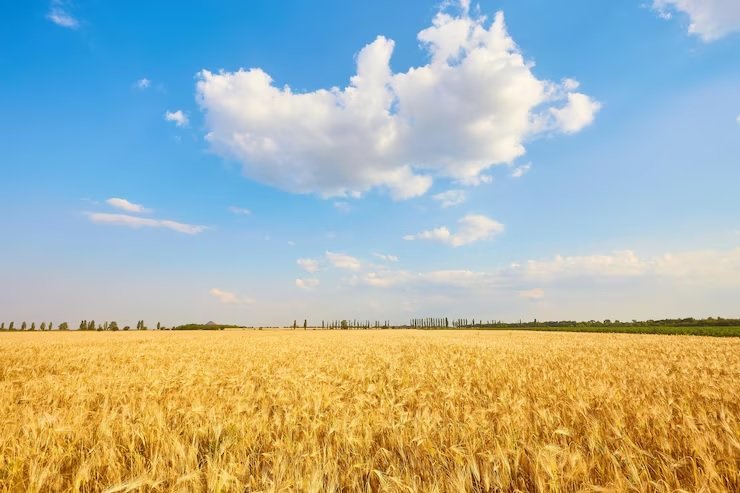
New Delhi. Indian farmers have left no stone unturned in increasing the sowing area of wheat, the most important food grain of the Rabi season.
Along with this, there has been increased use of improved and advanced quality seeds that have greater resilience to adverse weather conditions.
Generally, the weather conditions have been favorable for the crop, but some areas are experiencing a need for rain. If it rains there in January, the wheat crop could receive significant relief.
The Union Agriculture Ministry is confident that domestic wheat production in the current Rabi season of 2025-26 will increase sharply, reaching an all-time high.
This has forced the Food Ministry to formulate a new strategy. If production increases, government procurement for the central pool will also increase, which could lead to a crisis in safe storage.
Considering this, the Food Department has decided to reactivate the Open Market Sale Scheme (OMSS).
The Food Corporation of India (FCI) has been allowed to sell a total of 30 lakh tonnes of wheat from its stock by March 31, 2026, but so far only about 10 percent of this has been sold.
Wholesale market prices for wheat have remained largely stable. To increase its wheat sales, the FCI will have to reduce its minimum reserve price.
In addition, it is necessary to withdraw the stock limit order applicable to wheat, on which the government should take a positive decision.
Under the Open Market Sale Scheme, the reserve price for wheat has been fixed at Rs. 2550 per quintal, with transportation costs extra.
As a result, millers and processors in many states were showing very little interest in purchasing government wheat.