
Heavy Rains, Floods Threaten Kharif Crops
14-Aug-2025 06:33 PM
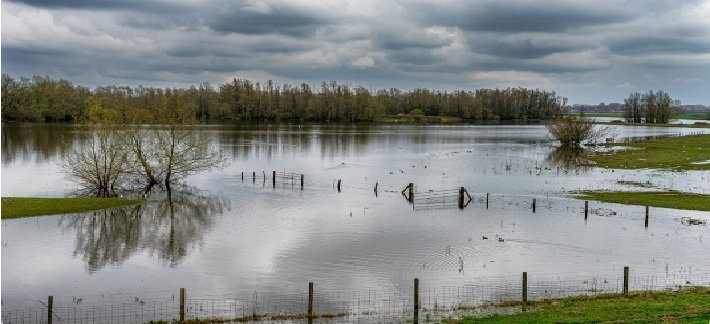
New Delhi. Due to regular monsoon rains in various states of the country, there are reports of damage to Kharif crops due to waterlogging in the fields and severe floods in the coastal areas due to the rise in the rivers.
Although the overall sowing area of these crops has increased, but paddy and maize have mainly contributed to it. The area of other crops (except sugarcane) is either around last year or slightly below that.
This includes tur, jowar, millet, groundnut, soybean and cotton etc. It is worth noting that these crops are more sensitive to waterlogging or high moisture in the fields and are unable to tolerate it for long.
The south-west monsoon has been continuously active since mid-July and due to its effect, there has been very good rainfall in various parts of the country.
But in the areas where there was very heavy rain, the standing crops in the fields got submerged. Earlier, many districts of states like Rajasthan, Madhya Pradesh, Uttar Pradesh and Gujarat were included in it whereas now some districts of Bihar, Bengal,
Jharkhand, Orissa and Chhattisgarh have also been included. On the other hand, heavy rainfall has been reported in some districts of Telangana and Karnataka in recent days.
The area under pulses, oilseeds and cotton is lagging behind last year whereas the ideal time for sowing is fast coming to an end. These crops have also been damaged in many areas which may affect production.
The irony is that India needs to increase the production of these crops drastically so that the increasing dependence on the import of pulses, edible oils and cotton from abroad can be reduced.
The government is taking necessary steps in this direction, proof of which is that the minimum support price (MSP) of various pulses (tuvar-urad), oilseeds (soyabean-peanut) and cotton has been increased substantially from 400 to 600 rupees per quintal, but the government has no control over rain and floods, which have become a disaster for crops.
Although the total rainfall at the national level has not been much more than the normal average, its distribution has been uneven. As a result, there has been heavy surplus rainfall at some places, while its shortage is being felt at other places.