
Humid Weather Triggers Pest and Disease Outbreak in Kharif Crops
20-Aug-2025 04:07 PM
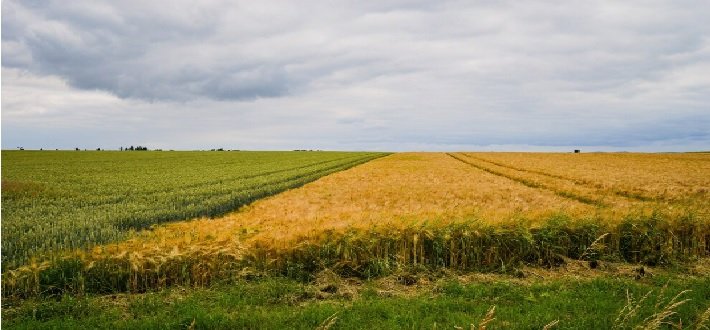
New Delhi. Except for some areas of eastern and northeastern India, this time the southwest monsoon rainfall has been more than the normal average in most other parts of the country, which includes central, western, southern and northwestern regions.
Due to extremely heavy rainfall, many areas were flooded and fields were submerged, due to which damage to Kharif crops is being reported there.
Apart from this, due to cloudy sky and humid weather, the attack of insects and diseases on Kharif crops is also increasing.
To control this, farmers have to spray insecticide chemicals on a large scale, which is increasing the cost and at the same time, there is a possibility of more residue of these chemicals being present in the grain of the crops, which can prove to be dangerous for the health of the people using it.
Insect and disease outbreak spreads rapidly in humid weather with high humidity and this causes serious damage to the crops.
According to the Meteorological Department, this time the monsoon rainfall at the national level has been close to the normal average, while it may increase further. Due to better rainfall, the production area of Kharif crops has increased by about 5 percent this time as compared to last year, but the outbreak of floods, rains and diseases and insects is also continuing.
This time a spectacular increase is being seen in the paddy and production area as compared to last year. The production area of paddy has reached close to the five-year average area, while the sowing area of maize has gone far ahead of it. A mixed trend is being seen in the sowing of other Kharif crops.
There has been a slight increase in the area of some crops, while the area of other crops has decreased. The sowing process is still going on, but its intensity has decreased.
It is necessary to protect Kharif crops from the attack of insects and diseases, other production may decline. India cannot afford a reduction in the production of crops, especially pulses and oilseeds, as this will increase the import of edible oils and pulses, which are already at a record level, spending huge amounts of precious foreign currency.