
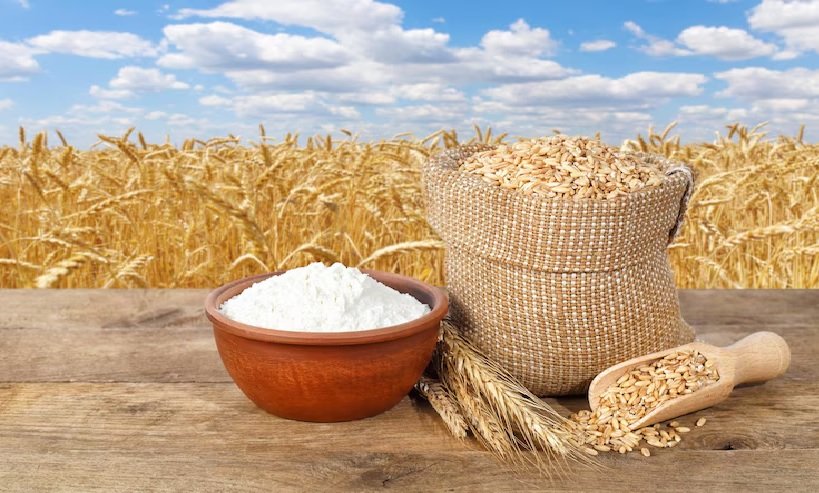
The increase in wheat production area in India, despite various challenges, highlights the growing enthusiasm among farmers for this essential Rabi crop.
This surge in interest is largely driven by the government's decision to raise the Minimum Support Price (MSP) of wheat by Rs 150, from Rs 2275 per quintal to Rs 2425 per quintal, coupled with the fact that the market price for wheat is significantly higher than the MSP.
Official figures indicate that wheat sowing has expanded to 239.49 lakh hectares this Rabi season, up by 5.35 lakh hectares compared to the previous year's area of 234.15 lakh hectares.
This reflects a strong push for wheat cultivation despite some unfavorable conditions, such as insufficient soil moisture, a shortage of DAP (Di-Ammonium Phosphate) fertilizer, and inconsistent weather patterns. In fact, the enthusiasm remains so high that farmers are willing to take on these risks.
The wheat cultivation area has also been noted to exceed the five-year average, which stands at 312.35 lakh hectares. Early sowing of wheat typically occurs in the northwestern regions of India, including Punjab, Haryana, Rajasthan, Gujarat, and parts of Uttar Pradesh,
Uttarakhand, and Himachal Pradesh. In contrast, sowing in areas like Madhya Pradesh, eastern Uttar Pradesh, and Bihar starts later in the season.
This increase in cultivation area signals optimism in India's agricultural sector, driven by favorable MSP and market conditions, despite ongoing agronomic and logistical challenges.