
Kharif Sowing Declines in Andhra Pradesh Due to Rainfall Deficit
10-Sep-2026 11:59 AM
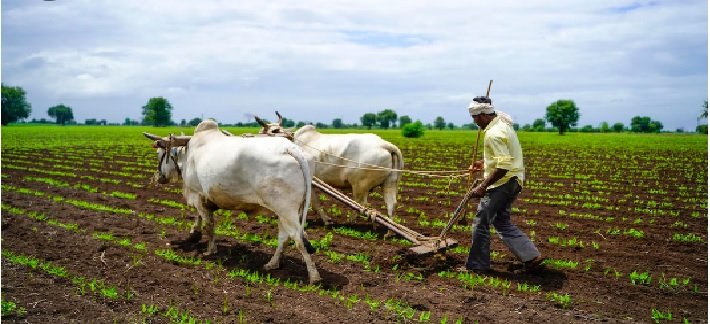
Vijayawada: Sowing of Kharif crops in Andhra Pradesh—a key agricultural state in South India—has been sluggish due to deficient monsoon rainfall and is now nearing its final stage. The state is a major producer of paddy, cotton, and pulses.
According to a report by the State Agriculture Department, the total area under Kharif crops in Andhra Pradesh reached 22.81 lakh hectares by September 9 this year; this is approximately 2.40 lakh hectares less than the 25.20 lakh hectares sown during the same period last year. Many parts of the state are in urgent need of rain, as the monsoon has been weak this season.
Official data indicates that compared to the previous year, the area under paddy in Andhra Pradesh dropped from 13.91 lakh hectares to 12.01 lakh hectares during the current Kharif season. Similarly, the area for coarse cereals fell from 2.10 lakh hectares to 1.51 lakh hectares, oilseeds from 2.05 lakh hectares to 1.94 lakh hectares, and cotton from 4.27 lakh hectares to 4.10 lakh hectares. Conversely, the area under pulses increased from 2.70 lakh hectares to 3.08 lakh hectares.
Among coarse cereals, the area under maize declined from 1.63 lakh hectares to 1.07 lakh hectares. Sowing areas for pearl millet (bajra) and finger millet (ragi)—crops cultivated on a smaller scale—also lagged behind last year's figures.
Among pulses, the area under pigeon pea (arhar/tur) rose from 2.41 lakh hectares to 2.62 lakh hectares, and the area for black gram (urad) improved from 20,000 hectares to 37,000 hectares. There was also a slight increase in the area under green gram (moong). Among oilseed crops, the area under groundnut cultivation declined from 1.62 lakh hectares to 1.47 lakh hectares, whereas the area sown with castor improved from 28,000 hectares to 30,000 hectares. Additionally, the sowing of sesame and soybean in Andhra Pradesh was limited to a small area.