
Punjab Achieves Strong Wheat Sowing Despite Seasonal Challenges
11-Dec-2025 05:03 PM
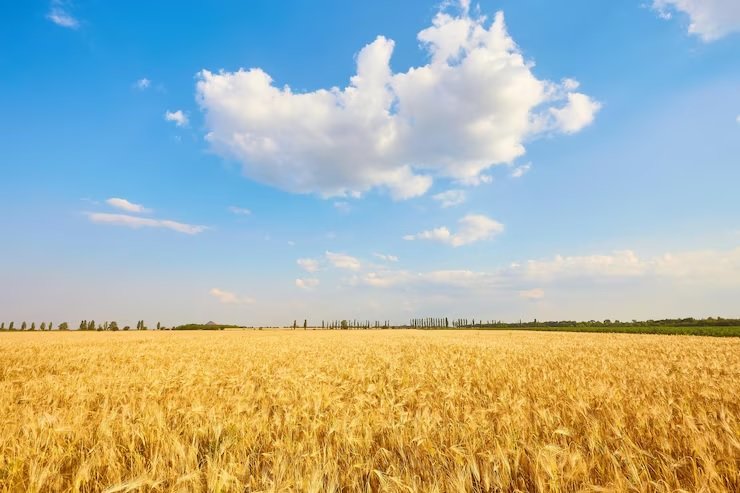
Chandigarh: Due to the extremely heavy rains of the southwest monsoon and severe floods, unnecessary and unusable debris had accumulated in the fields of several districts of Punjab, creating serious difficulties in wheat sowing and raising fears of a significant decline in production.
However, due to the serious efforts and incentives of the state government and favorable weather conditions, the situation rapidly returned to normal,
and despite all the challenges, farmers in Punjab have now succeeded in sowing wheat in approximately 99 percent of the identified area. This has also reduced the likelihood of a decline in wheat production.
Data from the Punjab Revenue Department shows that this year, 1,45,878 hectares of land were affected by excess rainfall and floods across the state. Of this, crops have been sown on 1,41,025 hectares, and sowing remains incomplete on only 4,853 hectares.
A large accumulation of sand and debris still remains on this land in remote and scattered areas, and the process of removing it is underway.
The districts most affected by the floods and rains include Gurdaspur, Amritsar, Ferozepur, Kapurthala, and Tarn Taran. In all these districts, the condition of almost the entire area of land has now returned to normal.
However, in Tarn Taran district, sand and debris still need to be removed from a little over 4,000 hectares of land. Farmer leaders have also acknowledged that problems now remain only in scattered, small plots of land.
In Tarn Taran and Amritsar, sowing of Rabi crops seems difficult on about 100 acres of land because even after removing the sand, sowing may still be challenging.
According to another farmer leader, only 5 percent of the land in Tarn Taran, Amritsar, Kapurthala, and neighboring districts has not been cleared, while 95 percent of the damaged land is ready for sowing Rabi crops.
It is noteworthy that Punjab is the largest contributor of food grains to the central pool and accounts for approximately 16 percent of the total national wheat production.
The wheat sowing process has already been completed in the state. This year, the target for wheat cultivation in the state was set at 34.90 lakh hectares, while the actual area sown reached 34.50 lakh hectares.