
Soybean Acreage Declines After Early Gains
15-Jul-2025 05:17 PM
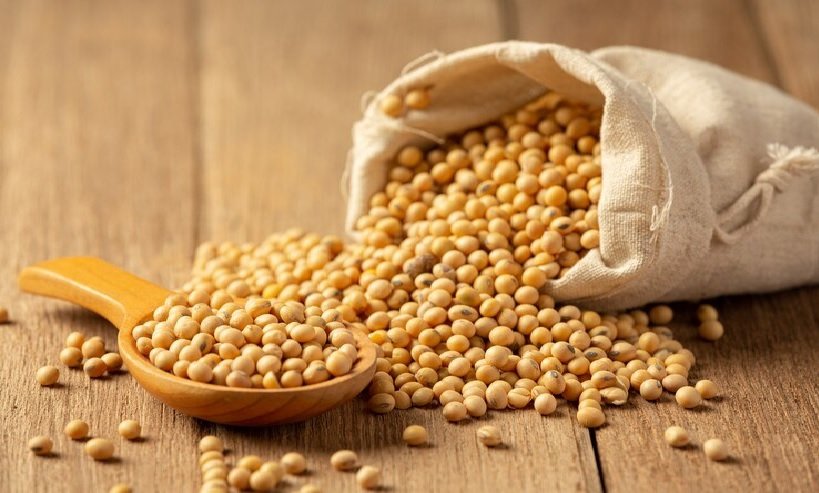
New Delhi. The production area of soybean, the main oilseed crop of the Kharif season, initially surpassed last year's levels but has now fallen behind by nearly 9 lakh hectares.
While Madhya Pradesh and Rajasthan have received good monsoon rainfall, rainfall has been relatively deficient in Maharashtra and Karnataka. In Rajasthan, soybean is the only major Kharif crop showing a decline in area, whereas the sowing of other crops has increased.
According to the Union Agriculture Ministry, as of July 11, the soybean cultivation area at the national level stood at 99.03 lakh hectares—down by 8.75 lakh hectares compared to 107.78 lakh hectares in the same period last year, and 28.16 lakh hectares short of the five-year average of 127.19 lakh hectares.
Although there is still some time left for sowing, and the government has raised the Minimum Support Price (MSP) for soybean by ₹436—from ₹4892 per quintal in 2024-25 to ₹5328 for the 2025-26 season—the current low market prices may dampen farmers’ enthusiasm for its cultivation.
The Soybean Processors Association of India (SOPA), based in Indore, had earlier projected a 5% decline in the domestic soybean acreage for this season, a forecast that appears accurate based on the current figures.
Rajasthan, the third-largest soybean-producing state, has seen its area fall from 10.25 lakh hectares last year to 9.30 lakh hectares this year. Reduced sowing is also being reported in parts of Maharashtra.
On the other hand, other oilseeds are seeing gains. Groundnut acreage has increased from 28.05 lakh hectares to 33 lakh hectares, sesame from 3.12 lakh hectares to 4.48 lakh hectares, and castor from 5,000 hectares to 24,000 hectares.
The area under sunflower remains steady at around 48,000–49,000 hectares, while Niger seed has seen a decline. With sowing still in progress, there remains a possibility of gradual improvement in the total area under oilseeds during the Kharif season.