
Strong sowing of Kharif crops
12-Jul-2025 12:04 PM
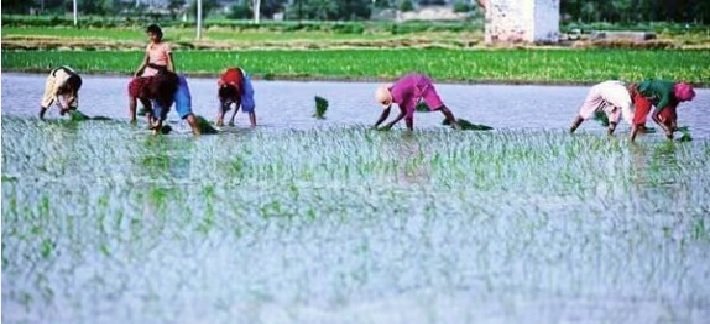
With favorable monsoon conditions developing across the Bay of Bengal, Arabian Sea, Indian Ocean, and Andaman Sea, the southwest monsoon is delivering abundant rainfall across most states in India.
This has significantly boosted the pace and extent of Kharif crop sowing. Although India’s vast geography means that rainfall is never evenly distributed—with some areas facing drought and others floods—overall monsoon performance this year appears better than usual.
While several districts in Bihar, Assam, Telangana, Andhra Pradesh, and parts of Karnataka have received below-average rainfall, leading to slower sowing progress there,
districts in Madhya Pradesh, Rajasthan, and Gujarat have received very heavy rain. In these areas, waterlogged fields have restricted sowing activities for most crops except paddy. Such regional variation is a recurring pattern every year.
According to the Meteorological Department, July rainfall has already exceeded the normal average by 15%, with much of the month still remaining.
Since July typically sees the highest rainfall, there is a strong likelihood of improved monsoon activity in rain-deficient areas soon.
The water level in dams and reservoirs has risen to over 51% of capacity and is expected to increase further, ensuring good availability of irrigation water—especially beneficial for the upcoming Rabi season.
As of the week ending July 4, Kharif crops have been sown on over 430 lakh hectares, which is more than 40% of the five-year average target of 1,097 lakh hectares.
In just one week, sowing expanded by 180 lakh hectares. With the monsoon remaining active across many states, sowing is likely to accelerate further in the coming weeks.
July and August are peak months for Kharif sowing, and if current trends continue and weather conditions remain favorable, the country is poised for another strong domestic harvest. This could also help in curbing food inflation.