
The Changing Mood of the Weather
11-Apr-2026 11:01 AM
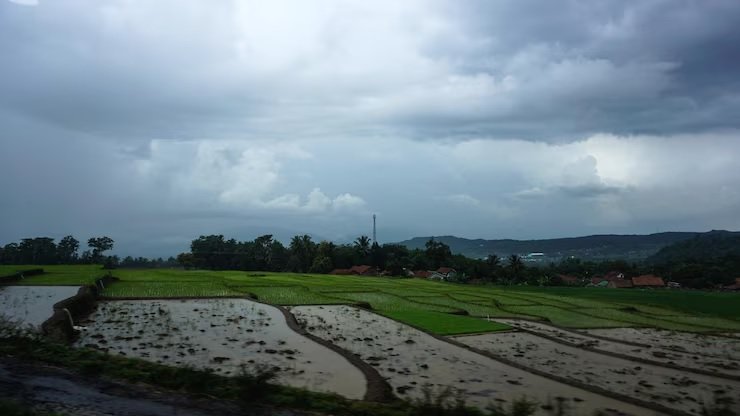
Since last month, a shift has been observed in weather conditions—a development that does not bode well for Rabi crops. Due to a succession of Western Disturbances and associated upper-air cyclonic circulations, weather patterns are undergoing changes across various states of the country.
Typically, the summer season in India commences during March and April; however, this year, not only have temperatures remained somewhat lower than usual, but intermittent spells of rain accompanied by storms have also persisted. Several regions have even witnessed hailstorms.
Such weather fluctuations occurring precisely during the harvest and preparation phase of Rabi crops prove to be detrimental. At this critical juncture, clear weather is essential to accelerate the harvesting of ripened crops. In contrast, however, the prevailing atmospheric conditions remain characterized by rain and showers.
Although the harvesting and preparation of most Rabi crops—including mustard, gram, and lentils/peas—have largely been completed, the primary food grain crop—wheat—still stands in the fields. The compounding problem is that the severity of storms, rainfall, and hailstorms is being observed most acutely in those very provinces that account for the highest wheat production.
A further complication is that the threat posed by this adverse weather has not yet fully subsided. While the Meteorological Department has forecast a rise in temperatures across several states—including Odisha, Chhattisgarh, Maharashtra, Gujarat, Karnataka, and Bengal—it has simultaneously indicated a likelihood of normal to heavy rainfall in the northeastern states.
A cyclonic circulation currently persists over Bihar and the northeastern parts of Assam. Meanwhile, in the northern, central, and northwestern provinces, the risk of unseasonal rainfall continues to loom, and temperatures remain close to normal levels.