
Upward Trend in Global Market Prices for Various Pulses
11-Sep-2026 03:47 PM
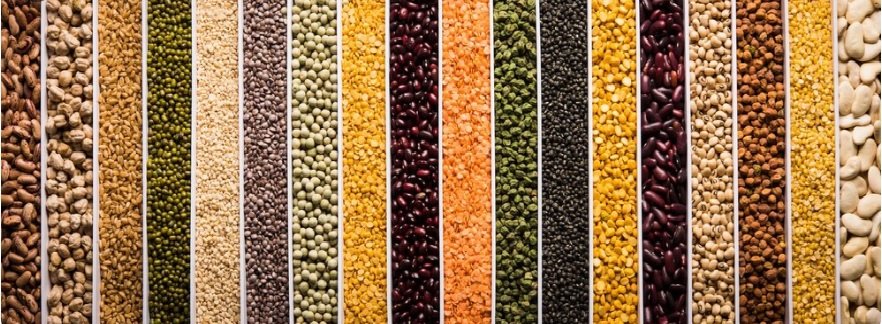
Mumbai. Compared to the week of September 3, the week of September 10 witnessed a trend of rising prices and market strengthening for various pulses, compounding difficulties for India, the largest importing nation. A weak monsoon in India is considered a key factor driving this surge in pulse prices. Additionally, production declines are anticipated for *chana* (gram) in Australia and peas and lentils in Canada, while exports of peas, lentils, and *kabuli chana* (chickpeas) from Russia are facing disruptions. Pulse production in the European Union has also been affected, whereas demand for various pulses remains robust in Southeast Asian countries.
For India-bound shipments scheduled for September/October, the price of *urad* (black gram) rose by $10 per tonne in Brazil and by $0–$5 per tonne in Myanmar. Export offer prices were recorded at $885–$965 per tonne for *urad* from Myanmar and $960 per tonne from Brazil (as of September 10).
Similarly, for September/October delivery, the export offer price for *desi chana* from Australia saw a significant hike of $25, reaching $685 per tonne; stocks there are limited, and production is expected to be lower.
Regarding green lentils for India-bound shipments (September/October), the export offer price from Canada surged by $50 on September 10 to reach $640 per tonne, while the offer price for red lentils from Australia rose by $5 to $555 per tonne.
During the same period, export offer prices for *arhar* (tur/pigeon pea) destined for India (September/October shipment) increased by $50 to $760 per tonne in Mozambique, rose by $30 to $895 per tonne in Myanmar, and jumped by $55 to $675 per tonne in Malawi. The offer price for red lentils in Canada rose by $20–35, reaching $550–590 per tonne.
As for yellow peas, the export offer price for shipments to India increased by $10–15 to reach $375–425 per tonne, while prices in Russia and Ukraine remained stable at $380 per tonne.