Mixed Trading in Coriander: Expectations of Increased Sowing
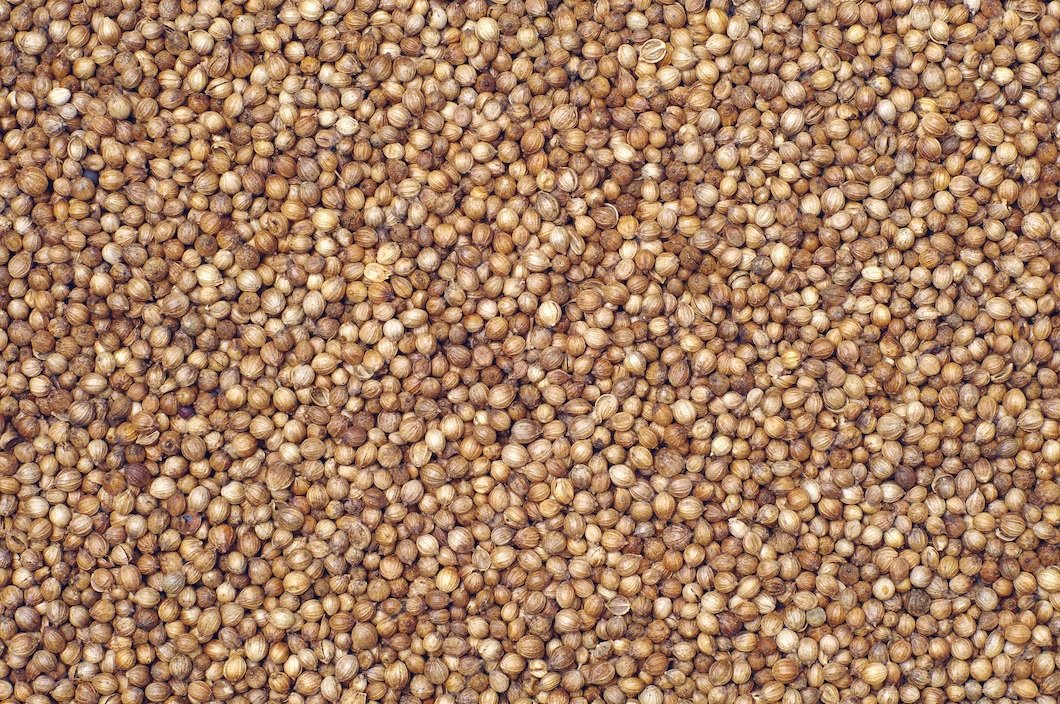
New Delhi. Coriander witnessed mixed trading throughout the current week. Notably, the market experienced a bearish trend early in the week following reports that coriander sowing in Gujarat was higher compared to the previous year; however, prices recovered by the end of the week, driven by an uptick in futures prices. Due to record-high prices for coriander during the current season, reports indicate that sowing is being carried out over a larger area in major producing regions. While there were earlier reports suggesting lower sowing in Gujarat, trade estimates now indicate an increase in the sown area—by 40–50% in Madhya Pradesh and 25–30% in Rajasthan. Sowing activities are currently in full swing across the producing regions. The expansion in the sown area is attributed to farmers receiving fair prices for their produce during the current season. According to available information, the area under coriander cultivation in the country was 2.97 lakh hectares in 2026, compared to 3.36 lakh hectares in 2025.
Prices
After an initial decline of ₹4–5 per kg early in the week, coriander prices saw a recovery of ₹2–3 per kg by the week's end. Market sources suggest that, given the low existing stocks in producing regions and the fact that the arrival of new produce is still 2–3 months away, a significant further decline in prices is unlikely. Currently, the 'Eagle' variety is being quoted at ₹145–150 per kg.
Arrivals
As the bulk of the total production has already reached the markets (mandis), the arrival of fresh produce from farmers has slowed down. In Gondal, a major market in Gujarat, arrivals have dropped to 1,200–1,500 bags, while in Rajkot, they are currently at 200–300 bags. In Rajasthan, Ramganj Mandi is seeing arrivals of 3,000–3,500 bags, and Kota is seeing 300–400 bags. In Madhya Pradesh, Guna Mandi is receiving 1,800–2,000 bags, and Neemuch is receiving 800–1,000 bags. Arrivals in Kumbhraj stood at 400–500 bags.
Production
Following a decline in the country's coriander production over the last three years, it is anticipated that production will increase in 2027, as reports indicate a larger area sown in the major producing regions. Sources note that the weather must also remain favorable following the sowing phase. According to estimates, national coriander production was 16 million (1.60 crore) bags in 2023, which fell to 12 million (1.20 crore) bags in 2024 and further to 11 million (1.10 crore) bags in 2025. Production for 2026 was estimated at 9.5–9.7 million (95–97 lakh) bags.
Stocks
Due to the decline in production, coriander stocks in the producing regions have also diminished. Current information suggests that stocks in these areas stand at approximately 2–2.2 million (20–22 lakh) bags, which are expected to be nearly exhausted by the time the new crop arrives. At the start of the current season, when the new crop was arriving, stocks in the producing regions stood at 2.2–2.5 million (22–25 lakh) bags. According to sources, current coriander stocks in the markets of Gujarat are estimated at 700,000 to 800,000 bags, while reports indicate stocks of 800,000 to 1,000,000 bags in Madhya Pradesh and 400,000 to 500,000 bags in Rajasthan.
Exports
During the current season, the volume of coriander exports has declined due to record-high prices; however, export earnings have increased as a result of these higher price levels. Data released by the Spices Board shows that between April and July, the volume of coriander exports fell by 20 percent, while export earnings rose by 19 percent. In the April–July 2026 period, coriander exports totaled 18,678 tonnes, generating earnings of ₹283.18 crore. In comparison, during the same period in 2025 (April–July), coriander exports stood at 23,447 tonnes, with earnings of ₹238.29 crore. For the full year 2025–26 (April–March), total coriander exports reached 60,211 tonnes, yielding earnings of ₹679.70 crore.