
Wheat Prices Fall Below MSP, Market Pressure Rises; Farmers and Industry Seek Relief
03-Dec-2025 03:18 PM
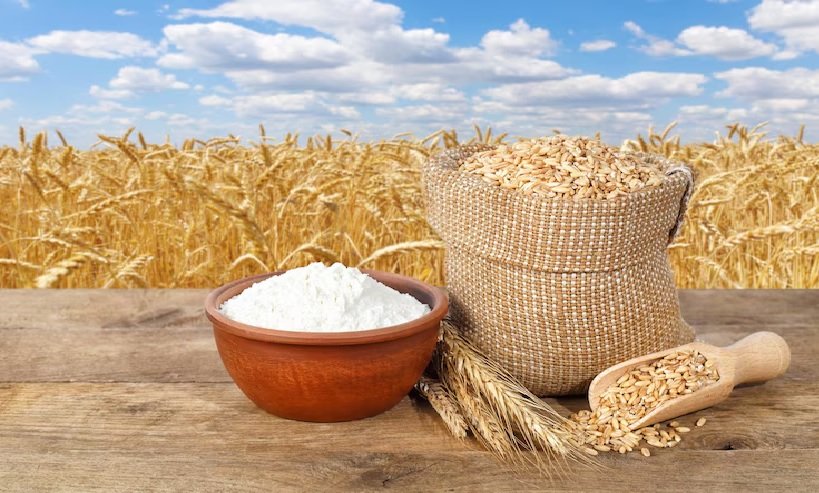
Wheat Prices Fall Below MSP, Market Pressure Rises; Farmers and Industry Seek Relief
New Delhi. Wheat prices in several markets across the country have slipped below the Minimum Support Price (MSP), increasing pressure on the agricultural market and creating a challenging situation not only for farmers but also for the wheat-processing industry. For the Rabi 2026–27 season, the MSP for wheat has been fixed at ₹2,585 per quintal, while most major centres are reporting prices lower than this benchmark.
Prices Across the Country
According to information received from various mandis, wheat prices were as follows — ₹2,525 in Jabalpur, ₹2,480 in Kota (mill quality), ₹2,530 in Sri Ganganagar, ₹2,510 in Gorakhpur, and ₹2,525 in Mathura. In Rajkot, prices ranged between ₹2,500 and ₹3,100 per quintal. After a long interval, this is the first time that market rates have fallen below the MSP.
This decline is mainly due to good availability, government sales at lower rates, weak demand for wheat products, and strict stock-limit regulations.
Many farmers are still not fully aware of the extent of this price fall, as most of them had already sold a large part of their produce earlier. As a result, farmers’ arrivals in mandis remain limited. Meanwhile, owing to better prices over the past two years, favourable moisture conditions, and an increased MSP, sowing activity continues at a strong pace.
Next year, during the harvest period, wheat prices may come under further pressure. At present, traders, stockists, and flour mills are grappling with high interest and transportation costs, while wheat prices remain at seasonal lows.
Industry Eyes Export Policy
For several months, the wheat industry has been hoping for the removal of restrictions on the export of wheat products. However, the government has not yet issued any notification. Currently, only bran exports are allowed, which is not sufficient to address the industry’s existing challenges. According to industry stakeholders, the wheat sector follows government policies more strictly than many other agricultural industries.
Need for Policy Reforms
If prices continue to remain below the MSP, farmers may face an additional decline of ₹200–300 per quintal when the new crop arrives next year. This could increase farmer distress, even as government procurement is expected to rise by 5–7 million tonnes.
Policy reforms should be implemented before government procurement begins so that farmers can receive at least the MSP from the open market, and the industry can also benefit from stable supply and pricing.