
Canada Confident of Increased Lentil Imports Due to Weak Monsoon in India
30-Apr-2026 02:07 PM
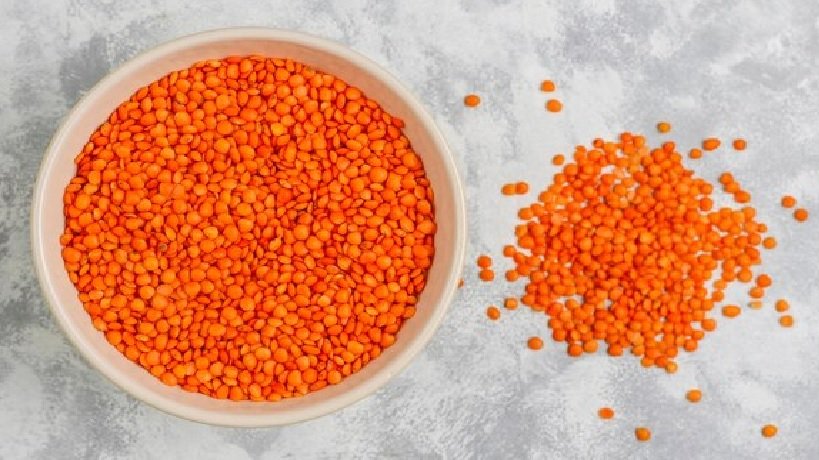
Saskatoon. Although lentils are not cultivated in India during the Kharif season—meaning there is no question of their production being directly affected by a weakening monsoon—there remains a strong possibility that their imports will rise indirectly.
In fact, the Kharif season witnesses large-scale production of pigeon peas (Tur/Arhar), black gram (Urad), and green gram (Moong). If the yields of these pulses are adversely affected by the impact of El Niño and a weak monsoon, it may become necessary to increase imports of lentils, alongside pigeon peas and black gram. Lentils are considered an excellent substitute for pigeon peas.
Consequently, a decline in pigeon pea production could lead to an increase in the import of green lentils. Furthermore, imports of pigeon peas and black gram themselves may also witness a surge.
According to a leading analyst, Canada already holds a massive stockpile of lentils, while sowing for the upcoming new crop has also commenced. Should the prospect of increased imports in India materialize, it could provide significant relief to Canadian farmers.
The India Meteorological Department (IMD) has forecast that rainfall during the Southwest monsoon season in the country this year will be 8 percentage points lower than the normal average. The long-period average for rainfall during the June-September period is estimated at 870 mm, whereas the actual total rainfall may remain limited to just 92 percent of this figure.
In India, the sowing of Kharif-season pulse crops typically begins in June and July, with harvesting commencing in September and October.
Rahul Chauhan—Managing Director of iGrain India, a leading commodity market research firm, and a renowned analyst—states that Kharif crops face a serious threat from adverse weather conditions this year.
The country did not receive adequate rainfall even during the preceding Rabi season. Soil moisture levels in the fields are already low; this raises concerns regarding the germination of Kharif crops and poses potential difficulties for early sowing.
Rahul Chauhan states that if there is a lack of rainfall, the yield of *tur*, *urad*, and *moong* will be adversely affected; the situation regarding their supply and availability will remain complex, and dependence on the import of pulses will increase.