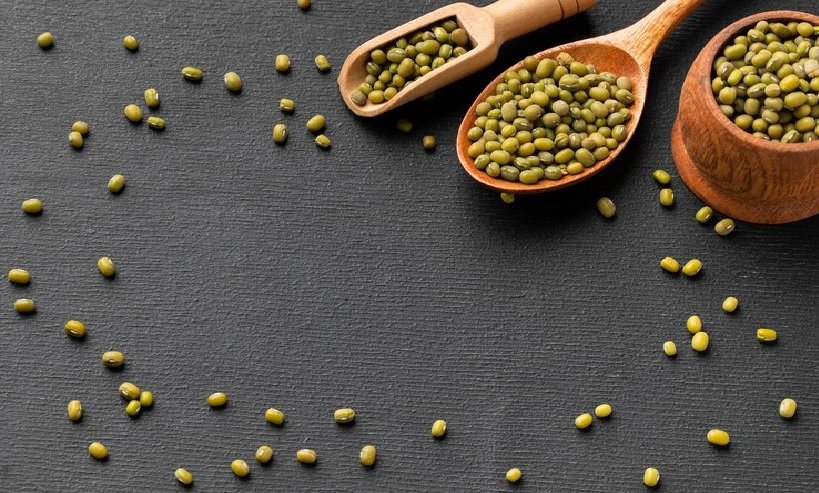
Moong prices remained stable last week due to weak demand. The sluggish buying activity from dal millers and stockists resulted in fluctuating prices, which failed to maintain upward momentum. Despite some volatility (with a Rs. 100 rise and fall per quintal), prices in Delhi settled between Rs. 7000 and Rs. 7600 per quintal by the end of the week.
Rajasthan:
Prices in Rajasthan held steady amid balanced availability and low demand. Prices across key markets in the state remained unchanged compared to the previous week. The following prices were recorded at the weekend:
Jodhpur: Rs. 6000/7400
Jaipur: Rs. 7000/7600
Sumerpur: Rs. 5500/7500
Nagaur: Rs. 7200/7900
Merta: Rs. 6500/7800
Kishangarh: Rs. 5500/7300
Madhya Pradesh:
Madhya Pradesh saw a slight dip in moong prices, falling by Rs. 100–200 per quintal. This decline was mainly attributed to weak demand. Prices at the end of the week were:
Pipariya: Rs. 6000/8250
Indore: Rs. 7500/8100
Kareli: Rs. 5900/7700
Jabalpur: Rs. 6000/8300
Karnataka:
Weak buying from dal millers led to a reduction in prices by Rs. 100–200 per quintal in Karnataka. The prices by the end of the week were:
Gulbarga: Rs. 4000/8200
Bidar: Rs. 7032/8251
Hubli: Rs. 5263/7410
Yadgir: Rs. 6575/8043
Gadag: Rs. 6167/8069
Maharashtra:
In Maharashtra, weak demand from dal millers also resulted in a drop of Rs. 100–200 per quintal. Prices at the end of the week were as follows:
Solapur: Rs. 7200/8300
Latur: Rs. 6000/8200
Akola: Rs. 6500/9000
Barshi: Rs. 7000/8200
Ahmednagar: Rs. 6500/8000
Dudhani: Rs. 6500/7500
Other Regions:
In Lalitpur, prices declined by Rs. 100 per quintal, with the final price range remaining between Rs. 5800 and Rs. 6500 per quintal.
Moong Dal:
Despite the weak demand across various markets, moong dal prices remained stable. The following prices were recorded at the end of the week:
Delhi: Rs. 9850/12100
Jodhpur: Rs. 9350/9550
Jaipur: Rs. 9600
Bhatapara: Rs. 10500
Jalgaon: Rs. 10200
Indore: Rs. 9400/10500
Summary:
The overall trend for moong prices this week has been one of stability with some regional fluctuations, primarily driven by weak demand from dal millers and stockists. With limited buying interest and an absence of major supply disruptions, prices remained largely unchanged or saw marginal declines across most key regions.