
Rainfall in northwestern India brings relief to rabi crops
23-Jan-2026 05:06 PM
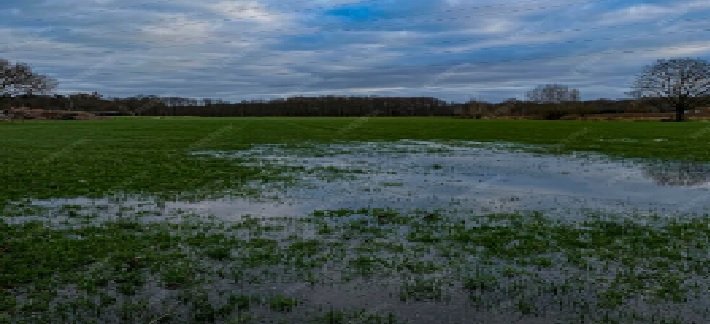
New Delhi. The Meteorological Department had earlier forecast light to moderate rainfall over the northwestern parts of the country between January 22 and 24, particularly across Punjab, Haryana, Chandigarh, Uttar Pradesh, Rajasthan, and Delhi. In line with this forecast, these regions have received rainfall, which is still continuing in some areas. This is expected to provide significant relief to major rabi crops such as wheat, chickpeas, barley, mustard, lentils, and peas. The region had been facing prolonged dry weather conditions, and rainfall was urgently needed. This precipitation could prove to be a boon for rabi crops.
Meanwhile, snowfall in the higher reaches of the northwestern Himalayan states—Himachal Pradesh, Uttarakhand, Jammu & Kashmir, and Ladakh—has intensified cold conditions in the plains, with temperatures dropping sharply.
According to the Meteorological Department, a western disturbance first became active, followed by the arrival of a second disturbance. Both disturbances merged midway, leading to rainfall across parts of India and Pakistan. Rainfall began on January 22 due to the influence of these disturbances and continued on January 23 as well.
Before merging, the first western disturbance was observed as an upper-level trough over far southeastern Iran, the adjoining northern Arabian Sea, and southwest Pakistan. The second disturbance was present as a cyclonic circulation in the lower atmosphere over northern Pakistan.
The impact of this interaction between the disturbances started becoming visible from January 22 onward. Widespread rainfall occurred across the affected regions, snowfall was reported in several areas, thunderstorms accompanied by lightning took place, strong winds were observed, and in some locations, cold blizzard-like conditions were also reported. Subsequently, this weather system moved eastward from Iran and Pakistan into India. Another western disturbance is likely to become active on Monday (January 26), which could be stronger, deeper, and more intense in nature.