
Weekly Review – Coriander
25-Apr-2026 07:48 PM
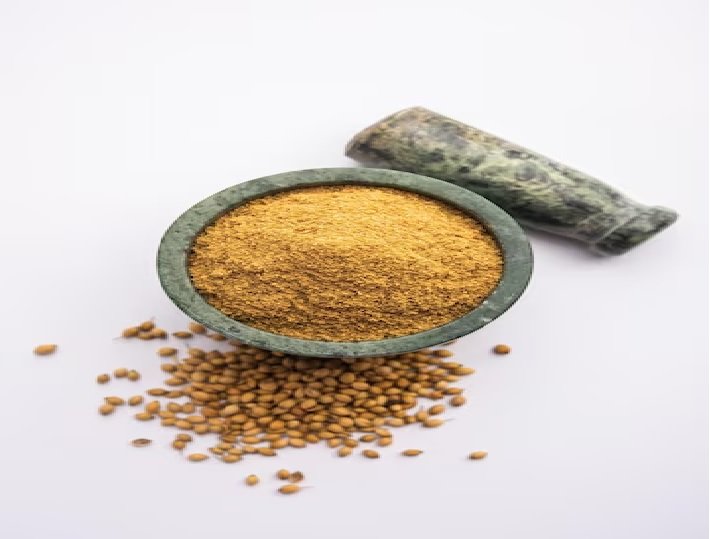
Coriander Prices Decline Due to Profit-Booking Sales
New Delhi: Driven by a record surge in coriander prices during the current season, profit-booking sales have intensified in the market. Consequently, towards the end of the week, coriander prices in both the futures and spot markets were quoted with a bearish trend. As *iGrain India* noted in its April 4th issue, the surge in profit-booking—triggered by the record rise in prices—could lead to a decline of ₹5 to ₹8 per kilogram. However, significant further downside is not anticipated, as the arrival of coriander in the *mandis* (wholesale markets) of the major producing states—Gujarat, Madhya Pradesh, and Rajasthan—has already begun to decline.
It is noteworthy that, due to a reduction in the sowing area, the country's coriander production for the current season is estimated to be lower. Market sources project that domestic coriander production this year will hover around 9.5 to 9.7 million bags. This stands in contrast to the estimated production of 11 million bags in 2025 and 12 million bags in 2024; in 2023, the country had witnessed a record production of 16 million bags.
Price Trends
Owing to reduced yields and depleted carryover stocks, coriander prices reached record levels early in the season. In the *mandis*, the price for 'Eagle' quality coriander surpassed the ₹130 per kg mark, while the 'Badami' variety crossed the ₹120 per kg threshold—setting an all-time historical high for both grades. Given that availability remains lower than consumption demand, it is projected that the price for 'Eagle' quality coriander could touch the ₹145 to ₹150 per kg level during the current season. Currently, export demand remains subdued, and purchasing activity by local stockists is also limited due to the prevailing high price levels. According to experts, the total availability for the current season—combining a yield of 9.5 to 9.7 million bags with a carry-over stock of 2 to 2.5 million bags—is projected to stand at 12 to 12.5 million bags. In contrast, the combined demand from exports and domestic consumption is estimated at 14 to 15 million bags. Consequently, the outlook for coriander remains positive, provided there are no imports in the coming days.
Arrivals Begin to Decline
Sources indicate that approximately 70–75 percent of the total production has already arrived in the markets (mandis) of Gujarat. Similarly, reports suggest that about 75–80 percent of the produce has reached the markets in Rajasthan. However, due to delays in arrivals, reports from Madhya Pradesh indicate that only about 50–60 percent of the produce has reached its markets so far. As a result, market arrivals in Madhya Pradesh are expected to remain robust for the next 10 to 15 days. Nevertheless, arrivals are expected to begin declining during the first week of May. Subsequently, market prices are likely to witness a gradual upward trend.
Exports
During the first ten months of the current financial year (2025–26), coriander exports witnessed a 5 percent increase in volume, while revenue from exports recorded a 10 percent growth. According to data released by the Spices Board, coriander exports totaled 52,006 tonnes during the April–January 2026 period. The revenue generated from these exports amounted to ₹570.29 crore. In comparison, during the previous season (April–January 2025), coriander exports stood at 49,396 tonnes, generating a revenue of ₹520.21 crore. For the full year 2024–25 (April–March), total coriander exports amounted to 60,330 tonnes, whereas the year 2023–24 had witnessed a record export volume of 108,624 tonnes.