
Sharp Decline in Kharif Crop Acreage Due to Rainfall Deficit
03-Jul-2026 06:06 PM
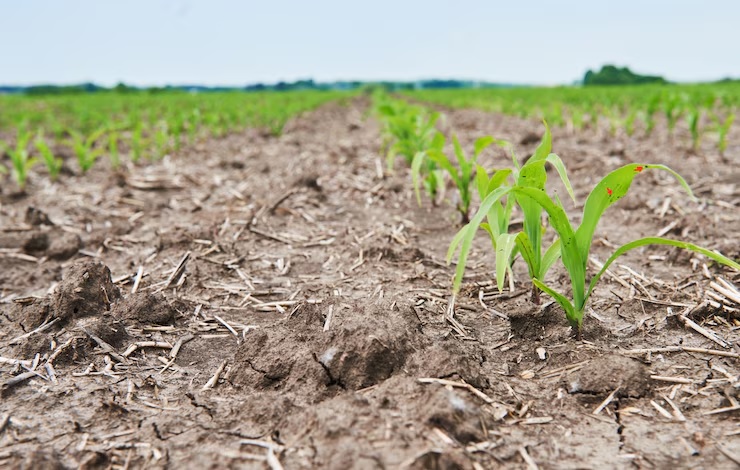
New Delhi. Due to a lack of southwest monsoon rainfall, the total area under Kharif crops stood at 182.72 lakh hectares as of June 25—a drop of approximately 23 percent (or 53.74 lakh hectares) compared to the 236.46 lakh hectares sown during the same period last year. A decline in acreage is being observed across almost all major Kharif crops compared to the previous year; this includes paddy, cotton, pulses, oilseeds, and coarse cereals.
Monsoon performance in June was disappointing, with rainfall reaching only 58 percent of the long-period average. Rainfall distribution was also uneven, failing to reach several regions entirely. The impact of the El Niño weather cycle on the monsoon was clearly evident, and this influence is likely to persist.
According to official data, the area under paddy—the most important food grain of the Kharif season—shrank by 8.65 lakh hectares compared to last year, settling at 25.75 lakh hectares. Similarly, the sown area for pulses fell from 21.46 lakh hectares to 14.92 lakh hectares, while the area under oilseeds dropped from 36.41 lakh hectares to 16.99 lakh hectares. A sharp decline of 19.42 lakh hectares was recorded in oilseed acreage. Cotton also saw a significant reduction in sown area.
Since 55–60 percent of the country's land area is entirely dependent on rainfall, a substantial drop in monsoon rains naturally increases the risk for Kharif crops. Although the pace of the monsoon has shown improvement since the beginning of July, it remains crucial to monitor how long this trend continues. A vast portion of the country was in the grip of drought conditions until the end of June.