
Water Levels in Dams and Reservoirs Drop Below 75 Percent
16-Jan-2026 04:58 PM
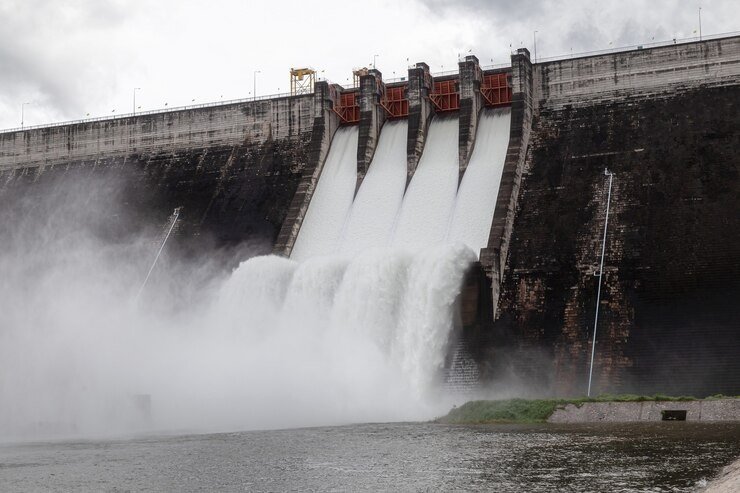
New Delhi: Due to insufficient rainfall and regular withdrawals, water levels in dams and reservoirs are continuously declining. A report from the Central Water Commission reveals that water levels in the country's 166 major dams and reservoirs have fallen below 75 percent of their total storage capacity, compared to over 90 percent in October. Water levels are below 80 percent in four of the country's regions. Further declines are expected.
According to the commission's latest data, these 166 major reservoirs currently hold 134.915 billion cubic meters (BCM) of water, which is 73.50 percent of their total storage capacity of 183.565 BCM. However, this water stock is 7 percentage points higher than the same period last year and 24 percentage points higher than the 10-year average.
Meanwhile, data from the Meteorological Department shows that out of the 724 districts from which weather data is collected, 89 percent have received little to no rainfall so far this year.
Nationally, only 1.8 mm of rainfall was recorded during this period, which is 73 percent less than the normal average of 6.7 mm.
Although water levels are relatively higher in the western region of the country, they have dropped in other areas. Water levels in dams and reservoirs, relative to their total storage capacity, were 84 percent in the western region and below 70 percent in the northern and southern regions.
The western region has a total of 53 major reservoirs. Of these, the single reservoir in Goa has a water stock equivalent to 89 percent of its capacity, while the dams in Maharashtra have 85 percent and the reservoirs in Gujarat have 82 percent of their water storage capacity.
However, the 11 major dams in the northern region have a total water stock of 13.298 billion cubic meters (BCM), against their total storage capacity of 19.836 BCM. Water levels in Himachal Pradesh have dropped to slightly below 60 percent, while in Punjab they are at 64 percent and in Rajasthan at 84 percent.
Currently, there is no serious water shortage for irrigating the Rabi crops, but the problem could worsen if the lack of rainfall continues.