Home News
08-Oct-2026 11:50 AM
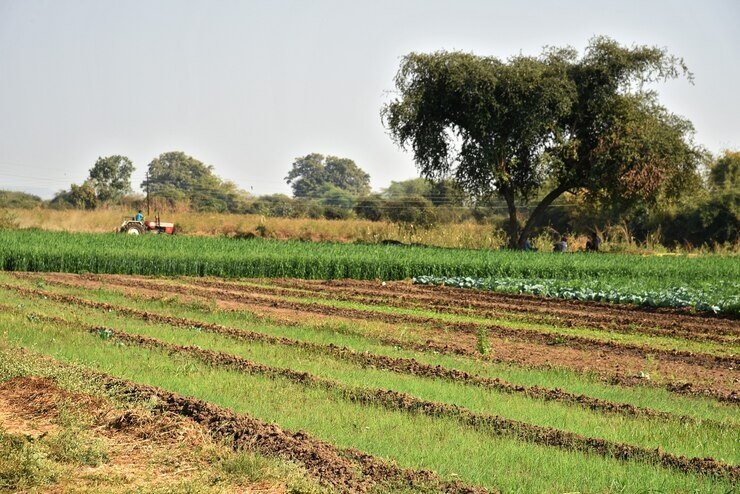
New Delhi. Southwest monsoon rainfall was approximately 13 percent below normal this year, while the intensity of the El Niño weather phenomenon is progressively increasing, casting doubt on the likelihood of adequate rainfall in the coming months. Given this situation, Indian farmers may prioritize cultivating crops that require relatively less water for irrigation during the upcoming Rabi season; these primarily include gram (chickpea) and mustard.
Major crops produced during the Rabi season include wheat, barley, gram, lentils, peas, and mustard. Additionally, sowing takes place for several crops that are also grown during the Kharif season, such as moong (green gram), urad (black gram), groundnut, sesame, sunflower, maize, and sorghum (jowar).
Rainfall distribution in Madhya Pradesh was uneven; while some districts received good rainfall, others recorded below-normal or scanty precipitation. Wheat cultivation acreage is expected to shrink significantly in the districts facing rainfall deficits. Instead, farmers may focus on cultivating pulses and oilseeds, with indications of a 25–30 percent rise in demand for their seeds. Acreage for linseed and safflower is also likely to increase in the region.
Farmers in Maharashtra, Karnataka, and Telangana are facing a dilemma. Large areas in these states are gripped by severe drought, and a critical lack of soil moisture is evident. Farmers in rain-fed regions may encounter significant difficulties in selecting crops for sowing. While gram is produced on a large scale in these states, mustard cultivation is either non-existent or negligible.