
Plan to Boost Kharif Pulse Production in Karnataka
20-Apr-2026 01:49 PM
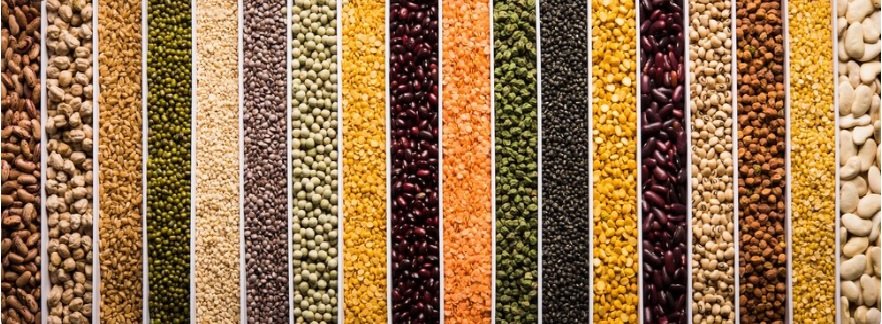
Bangalore: With the objective of establishing Karnataka as one of the country's leading pulse-producing states, the state government has launched a new campaign aimed at expanding the cultivation area.
Under this initiative, special efforts will be undertaken during the upcoming Kharif season to boost the sowing, average yield rates, and overall production—as well as to improve the quality—of Arhar (Tur), Urad, and Moong pulses.
The Karnataka Department of Agriculture has formulated an action plan to expand the total area under pulse cultivation in the state from the current 36.74 lakh hectares to 32.65 lakh hectares by the year 2030-31.
Under this plan, particular emphasis will be placed on the cultivation of Tur, Urad, and Moong pulses. In addition to these, Karnataka also records significant production of other pulses, including Bengal Gram (Chana). To enhance pulse productivity, the utilization of new technologies and improved seed varieties will be increased.
During the 2024-25 season, Karnataka produced a total of 20.57 lakh tonnes of pulses, with an average yield rate of 571 kilograms per hectare. Consequently, Karnataka secured the fifth position among states in the country in terms of pulse production.
The top spot was held by Madhya Pradesh, which produced 58.51 lakh tonnes of pulses. In Madhya Pradesh, along with Bengal Gram, Urad, and Moong, pulses such as Tur, Masoor (Lentil), and Peas are also cultivated.
The Karnataka Department of Agriculture has set a target to raise the average yield rate of pulses to 845 kilograms per hectare by the year 2030.
To achieve this goal, the focus will be on expanding the cultivation area for advanced, high-yielding pulse varieties that possess superior disease resistance and mature within a relatively shorter timeframe. The Tur crop, in particular, has a relatively long growth cycle.