
Low Trading Volume in Coriander at Elevated Prices: Rates Soften
29-May-2026 07:05 PM
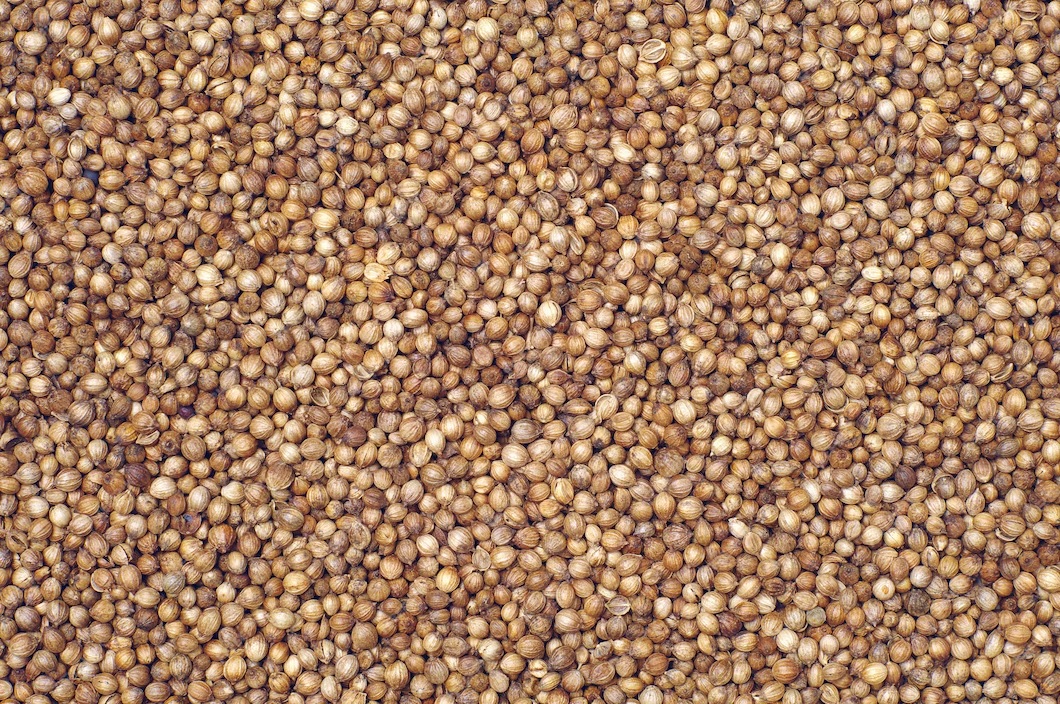
New Delhi. Currently, coriander prices remain soft due to subdued trading activity. However, given the decline in market arrivals, significant further downside risk to current prices appears unlikely. Sources indicate that exports are being adversely affected by the ongoing conflict in the Middle East. Notably, earlier this season, coriander prices witnessed a record surge—driven by lower domestic production and depleted carry-over stocks—but have recently eased somewhat as high price levels began to dampen demand.
Market experts observe that domestic coriander production has been on a downward trend for the past three years; producers, failing to secure remunerative prices for their harvest, are increasingly prioritizing the cultivation of alternative crops over coriander. According to estimates, domestic coriander production—which stood at a record 16 million bags in 2023—declined to 12 million bags in 2024 and further to 11 million bags in 2025. Trade estimates for the current year, 2026, project a further contraction in production, pegging the output at a mere 9.7 million bags. Data suggests that during the current season, coriander production in Madhya Pradesh is estimated at approximately 4.3 to 4.4 million bags, while production in Gujarat is projected to hover around 4 million bags. In Rajasthan, production is estimated at 1.2 to 1.3 million bags.
Prices
Due to sluggish domestic and export demand, current prices at major production centers have softened; the "Eagle" variety of coriander is currently being quoted at ₹125–130 per kilogram, while the "Badami" variety is trading at ₹115–120 per kilogram. Sources suggest that prices are likely to firm up in the coming days as export demand is expected to pick up. It is noteworthy that, in recent days, prices for the 'Eagle' variety of coriander at markets in key production centers touched a record high of ₹132–135, while the 'Badami' variety reached ₹122–125.
Arrivals
Due to the fact that the majority of the total produce has already arrived at the markets in the production centers, arrivals at these markets have currently begun to decline. In Gujarat, arrivals at the major Gondal market have dropped to 4,000–5,000 bags, while in Rajasthan, arrivals at the Ramganj market have fallen to 2,500–3,000 bags. Arrivals at the Kota market now stand at 1,000–1,200 bags. In Madhya Pradesh, arrivals at the Guna market have dropped to 5,000–6,000 bags, and at Kumbhraj, to 2,000–3,000 bags. Sources indicate that 70–75 percent of the total produce in Gujarat has already reached the markets, whereas in Rajasthan, 75–80 percent has arrived. Reports suggest that 60–70 percent of the produce has reached the markets in Madhya Pradesh.
Exports
According to data released by the Spices Board, during the first ten months of the 2025–26 fiscal year (April 2025 to January 2026), coriander exports totaled 52,006 tonnes, generating export revenue of ₹570.29 crore. In comparison, during the April–January period of 2025, coriander exports stood at 49,396 tonnes, yielding export revenue of ₹520.21 crore. It is worth noting that during the 2023–24 fiscal year, coriander exports reached a record high of 108,624 tonnes, a figure that subsequently declined to 60,330 tonnes in the 2024–25 fiscal year.